
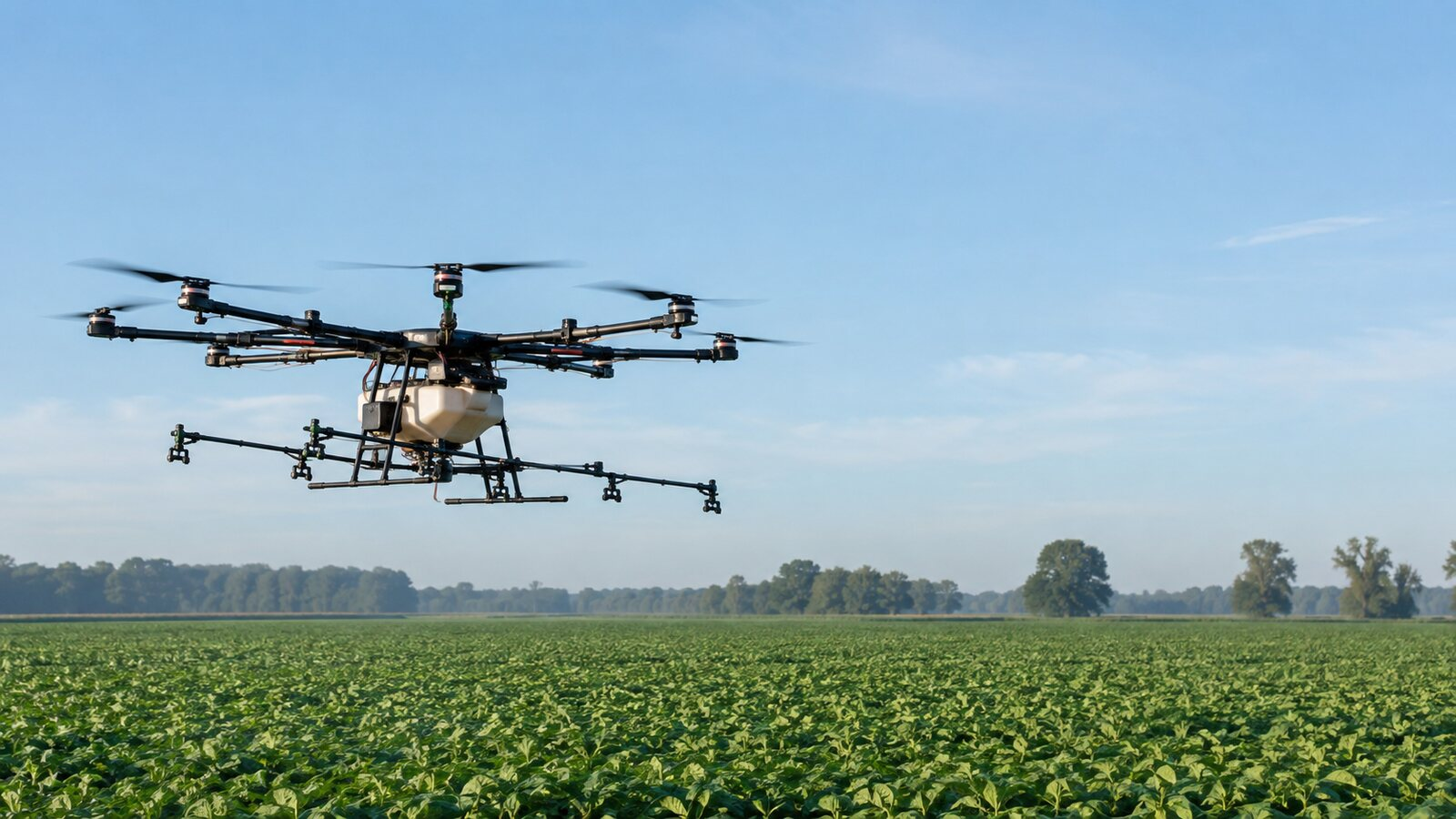
The Federal Aviation Administration has proposed a $289,215 civil penalty against Gorge Drones of Stevenson, Washington. The agency alleges the company used a drone to dispense fertilizer on 15 occasions without the required agricultural aircraft operator certificate, and that the aircraft was unregistered and lacked an airworthiness certificate. The proposal is an allegation, not a final adjudication.
For agricultural drone operators, the immediate takeaway is practical: before the next dispensing job, verify the Part 137 certificate, aircraft registration, and every exemption or approval that applies to the aircraft and operation.
What the FAA Actually Announced
In an August 7, 2026 enforcement announcement, the FAA said the alleged operations occurred on various dates between March and April 2025. It did not identify the aircraft model or weight, publish its penalty calculation, or include a response from Gorge Drones.
The FAA separately says operators who fly unsafely or without authorization can face civil penalties of up to $75,000 per violation, along with certificate suspension or revocation. That is a general statutory ceiling, not a statement that each allegation in this case carries that amount.
Part 107 and Part 137 Can Apply Together
A Part 107 remote pilot certificate by itself does not authorize every agricultural dispensing operation. Under 14 CFR Part 137, dispensing fertilizer for plant nourishment is an agricultural aircraft operation, and—with limited exceptions—the operator must hold an agricultural aircraft operator certificate.
The aircraft’s loaded takeoff weight and the material being dispensed determine which additional rules and approvals apply. The FAA’s current agricultural UAS guidance draws this distinction:
| Aircraft and operation | Core federal framework | Registration path |
|---|---|---|
| Under 55 pounds at takeoff, including payload | Part 107 and Part 137, plus any needed exemptions—including from § 107.36 if hazardous material is carried | FAA DroneZone registration |
| 55 pounds or more at takeoff | Part 91 and Part 137, with the exemptions and operating approvals required for that aircraft and mission | Part 47 registration and an N-number |
For aircraft or missions outside Part 107, the FAA may use its 49 U.S.C. § 44807 exemption authority. Operators should read the actual exemption, certificate, and certificate of waiver or authorization rather than relying on a vendor’s summary. Equipment costs are only one part of the operating picture; our agricultural spray-drone cost analysis covers related fleet-planning pressures.
What This Case Does—and Does Not—Show
The proposed fine is significant and directly relevant to commercial applicators, but it does not by itself prove that every Part 137 operator faces a new audit regime. The FAA did announce in February that its 2026 enforcement policy requires legal action for certain operations that endanger the public, violate airspace restrictions, or further another crime. In April, it also launched the DETER program to resolve some less-serious drone violations more quickly. Neither announcement establishes the outcome of the Gorge Drones case.
The safer conclusion is narrower: the FAA is willing to pursue a six-figure proposed penalty when it alleges repeated agricultural operations without required certificates and aircraft documentation.
A Preflight Compliance Check for Agricultural UAS
- Confirm the operation is covered. Check whether the material and purpose fall within Part 137’s definition of an agricultural aircraft operation.
- Match authority to the exact aircraft. Verify the Part 137 certificate, registration, exemptions, operating limitations, and any required COA cover the aircraft and mission you plan to fly.
- Check weight with payload. The 55-pound threshold uses takeoff weight, including the substance being dispensed.
- Verify pilot and supervisor qualifications. Make sure the people conducting the work satisfy the requirements and limitations in the operator’s approvals.
- Keep the records Part 137 requires. Under § 137.71, a commercial operator must keep customer, service-date, material, quantity, and pilot records current and retain them for at least 12 months.
- Check non-FAA requirements. Pesticide labeling, applicator licensing, environmental rules, and state or local requirements may apply in addition to federal aviation rules.
If any authority is unclear, pause the job and confirm it with the FAA office responsible for the operation and the relevant state regulator. This article provides general information, not legal advice.