
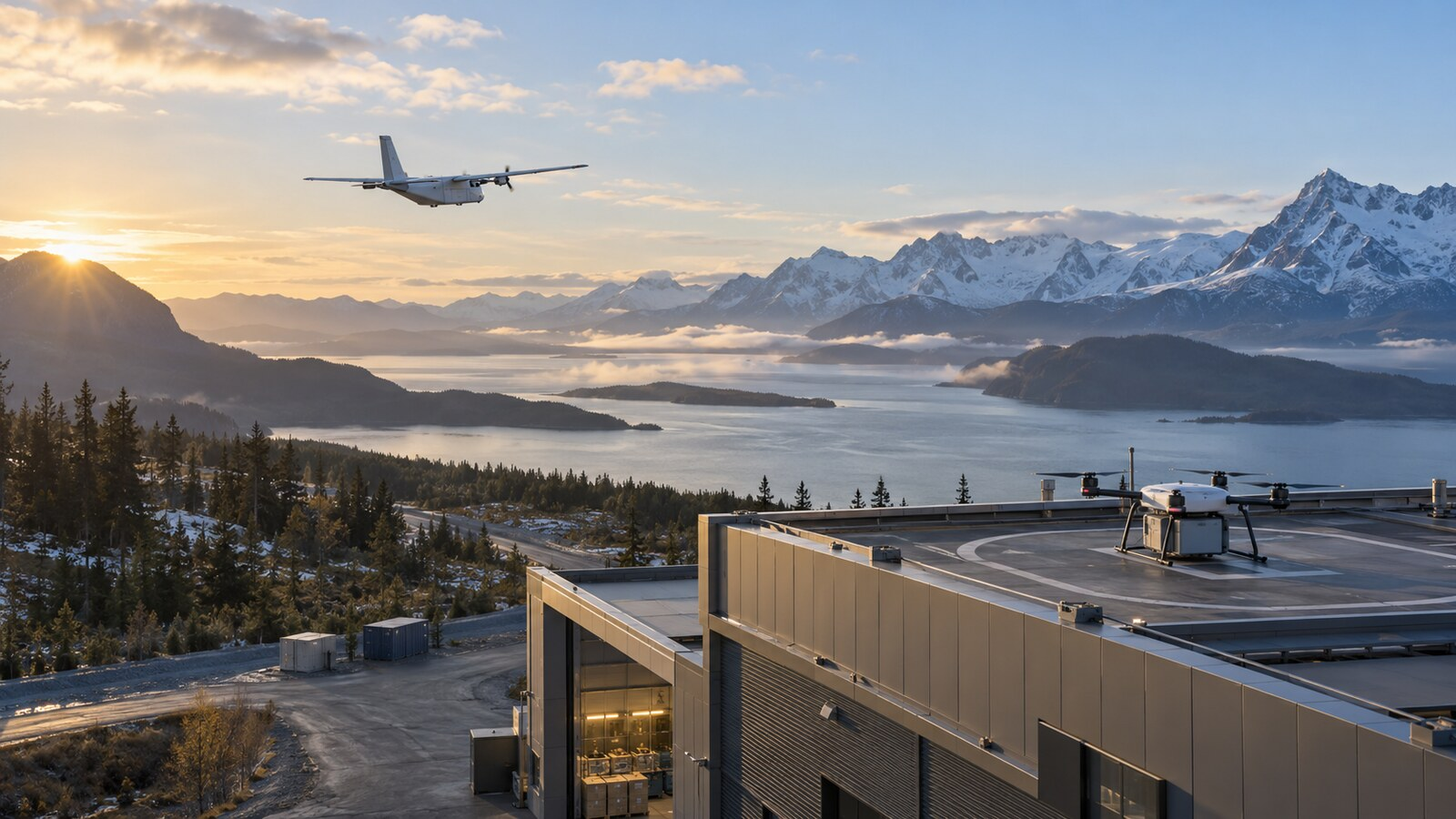
This week’s takeaway: drone operations are moving from isolated demonstrations toward purpose-built logistics networks—but the evidence is uneven. A 1,000-kilometer Alaska flight produced real test data, Flytrex is putting aircraft closer to restaurant orders, and Powerus signed a defense cooperation memorandum with Pakistan. None of those developments alone proves commercial scale. Together, they show that range, infrastructure and international production partnerships are becoming as important as the aircraft themselves.
A 1,000-kilometer Alaska flight tested medical-sample logistics—what the laboratory results still need to prove
The International Testing Agency said a Windracers ULTRA carried anonymized blood samples about 1,000 kilometers across Alaska in a trial designed to test whether long-range uncrewed transport could support anti-doping programs in remote regions. The flight departed Nenana Municipal Airport on August 19 with operational support from the Alaska Center for Unmanned Aircraft Systems Integration; the results were announced September 16. Reuters reported that matched control samples remained on the ground so laboratories could compare the two groups.
The operational milestone is real, but it is not yet proof that every transported sample remained analytically equivalent. Researchers monitored temperature, humidity, pressure, vibration and acceleration, and the laboratory comparison is the part that determines whether the logistics method is suitable for regulated evidence. The agency also described drone transport as a supplement to existing logistics, not a replacement.
Why it matters: long-range cargo aircraft could serve medical, research and humanitarian routes that are difficult or expensive for conventional transport. Windracers describes ULTRA as a heavy-lift autonomous platform for remote operations, but its broader range and reliability figures remain manufacturer specifications. The flight builds on the cargo-demonstration trend covered in our earlier hybrid-cargo roundup. Watch for the laboratory findings, operating authorization details and the cost per completed route.
Flytrex moves delivery drones onto restaurant rooftops—why utilization matters more than headline speed
Flytrex is installing rooftop docking stations at restaurants across the Dallas–Fort Worth area and using demand forecasts to reposition idle aircraft before an order is ready. Axios reported the rollout on September 16. The model replaces part of the trip between a centralized launch site and the restaurant with a distributed network of smaller bases.
Flytrex says it plans more than 100 restaurant docking sites and that the system can reduce its delivery costs by 60% while cutting delivery time in half. Those are company claims; public reporting reviewed for this roundup did not provide route-level cost data, the denominator behind the percentage, or independent validation. Rooftop deployment also raises practical questions involving property permission, charging, weather exposure, maintenance, noise and safe access.
Why it matters: drone delivery economics depend heavily on aircraft utilization and the amount of human handling between kitchen and customer. Positioning a drone where demand is likely to appear could attack both problems. It is a different infrastructure strategy from the in-house network examined in our DoorDash Air analysis and the centralized automation discussed in our drone-in-a-box guide. Watch for FAA authorization boundaries, completed deliveries per dock, labor savings and whether restaurant partners keep the stations after the initial rollout.
Powerus signs a Pakistan Army memorandum—why an initial order is not the same as a manufacturing program
U.S. drone company Powerus says it signed a memorandum of understanding with the Pakistan Army that includes an initial, undisclosed order related to uncrewed aircraft technology and an intention to explore localized production. Reuters reported the agreement on September 16. Pakistan’s military confirmed procurement discussions with the company but, in the reporting reviewed, did not separately confirm the signed memorandum or disclose an order value.
The Financial Times also reported the planned cooperation, including the company’s stated goal of reducing Pakistan’s reliance on Chinese defense imports. Powerus is preparing to merge with publicly traded Aureus Greenway Holdings, while an investment fund associated with Donald Trump Jr. and Eric Trump backs the combined company. The brothers have described their investment as passive and denied involvement in negotiations.
Why it matters: localized assembly agreements are becoming a route into defense markets where supply-chain sovereignty and technology transfer carry political weight. But a memorandum usually records intent; it does not establish production volume, delivery dates or a funded multiyear program. That distinction also mattered in our coverage of Canada’s million-drone production proposal. Watch for a binding contract, export approvals, disclosed quantities, the production split between the United States and Pakistan, and confirmation from Pakistan’s military procurement authorities.
What to watch next
The next useful evidence will be operational rather than promotional: laboratory results from the Alaska samples, real delivery and labor data from Flytrex’s rooftop network, and binding terms behind the Powerus agreement. Until those arrive, the safest conclusion is that all three projects have crossed an important threshold—but none has yet demonstrated repeatable scale.
Disclosure: This article contains no affiliate links. Vendor cost, performance, production and expansion figures are identified as company claims and should be independently verified before procurement or investment decisions.