The takeaway: Cyberhawk said on September 28 that it has secured a three-year agreement to inspect and survey SSE’s British electricity networks, with an option for two additional years and a new role inspecting offshore wind turbines. The practical significance is broader than a drone-services renewal: field imagery, geospatial records and AI-assisted analysis are being tied into a continuing asset-management workflow. However, neither the contract value nor expected inspection volume, aircraft fleet, BVLOS scope or measurable performance targets were disclosed.
The agreement covers grid assets and offshore wind
Ondas announced on September 28 that its Cyberhawk subsidiary had secured an initial three-year agreement with SSEN Transmission and SSEN Distribution. The award includes an option to extend the relationship by two years and covers specialist drone inspection and surveying across electricity transmission and distribution infrastructure in Britain.
The supplier also said Cyberhawk received “Lot 2” for offshore wind-turbine inspection, extending the scope into SSE’s renewable-generation assets. DRONELIFE reported the expanded scope on October 1 and noted that the agreement is the third major long-term award in a relationship spanning more than a decade.
The current award details are supplier-announced. A current SSE award notice confirming the commercial terms was not available in the sources reviewed, and no contract value, minimum work commitment, asset count, flight volume or mobilization timetable was disclosed. The extension is an option, not a guaranteed five-year term.
The long relationship makes this more than a first trial
SSE’s own archive shows that the companies’ work predates the current announcement. In a 2014 release, SSE said it began working with Cyberhawk in 2009 and described using remotely operated aircraft and the iHawk software to inspect transmission towers. At that stage, SSE emphasized reducing climbing exposure while giving engineers more detailed imagery and component records.
That history matters because the new agreement is not simply a demonstration of whether a drone can photograph a tower. It extends an established inspection relationship across a large asset base and adds offshore turbines, where access, weather windows, corrosion, blade condition and distance from shore make inspection planning more demanding.
The new award also sits alongside a renewed multi-year agreement for iHawk as a Service. Cyberhawk describes iHawk as a system of record that combines imagery, geospatial information and AI-assisted analytics around individual assets. The useful operational shift is from collecting attractive aerial images to maintaining repeatable inspection histories that help engineers compare condition over time and prioritize follow-up work.
Why integrated inspection data matters
A mature utility program needs consistent capture standards, defect classification, engineering review and traceability. A drone can reduce some exposure to work at height and reach viewpoints that are difficult to obtain from the ground, but the aircraft is only one part of the process. The value depends on whether the imagery is complete, correctly associated with each component and reviewed under a defensible quality system.
Linking field capture to an asset record can make repeat inspections more useful. Teams can compare the same conductor fitting, insulator, tower member or turbine surface across inspection cycles instead of searching through disconnected folders. That can support maintenance prioritization, but it does not mean an AI flag is an engineering diagnosis. The announcement provides no accuracy, false-positive, missed-defect or inspection-completeness data for the analytics.
All About UAVs recently covered Cyberhawk’s expanded work with Bechtel, where the company is also combining aerial capture with software and AI-assisted analysis. The SSE agreement is a separate material development: it concerns long-term energy-infrastructure inspection and adds offshore wind rather than construction-progress monitoring.
Offshore work adds operational complexity
Offshore wind inspections can reduce the need to position personnel on turbines for every visual check, but the environment creates its own constraints. Wind, precipitation, salt exposure, vessel or platform access, communications coverage and limited weather windows can affect whether a mission launches and whether the collected data meets the inspection plan.
The announcement does not identify the aircraft, sensors, launch method, operating bases or whether missions will be conducted within visual line of sight or under broader permissions. It also does not say which turbine components are covered, how often inspections will occur or how findings will be verified. Those details will determine how much of the inspection workflow drones actually replace and how much still requires rope access, crewed aviation, ground sensors or shutdown-based examination.
What operators should take from the award
For commercial UAV teams, the clearest lesson is that recurring infrastructure work is built around evidence management, not one-off flights. Utilities need standardized deliverables, secure data handling, repeatable viewpoints, qualified interpretation and a process for escalating suspected defects. Aircraft performance matters, but integration with the customer’s maintenance and risk systems is what turns inspection data into an operational service.
The next useful disclosures would include the number and type of assets inspected, annual mission volume, operational approvals, inspection-quality metrics and examples of maintenance decisions supported by the data. Contract value and any minimum work commitment would also help readers distinguish the maximum scope of the framework from guaranteed activity.
Until those details emerge, the verified development is narrower but still important: Cyberhawk has announced another multi-year SSE inspection agreement, the relationship now formally reaches offshore wind, and the accompanying data platform remains part of the program. Claims about cost savings, inspection performance or scale should wait for measurable results.
Sources and disclosure
- Ondas: Cyberhawk secures multi-year SSE inspection agreement (Sept. 28, 2026)
- DRONELIFE: Cyberhawk agreement expands into offshore wind (Oct. 1, 2026)
- SSE: historical Cyberhawk and iHawk relationship (June 13, 2014)
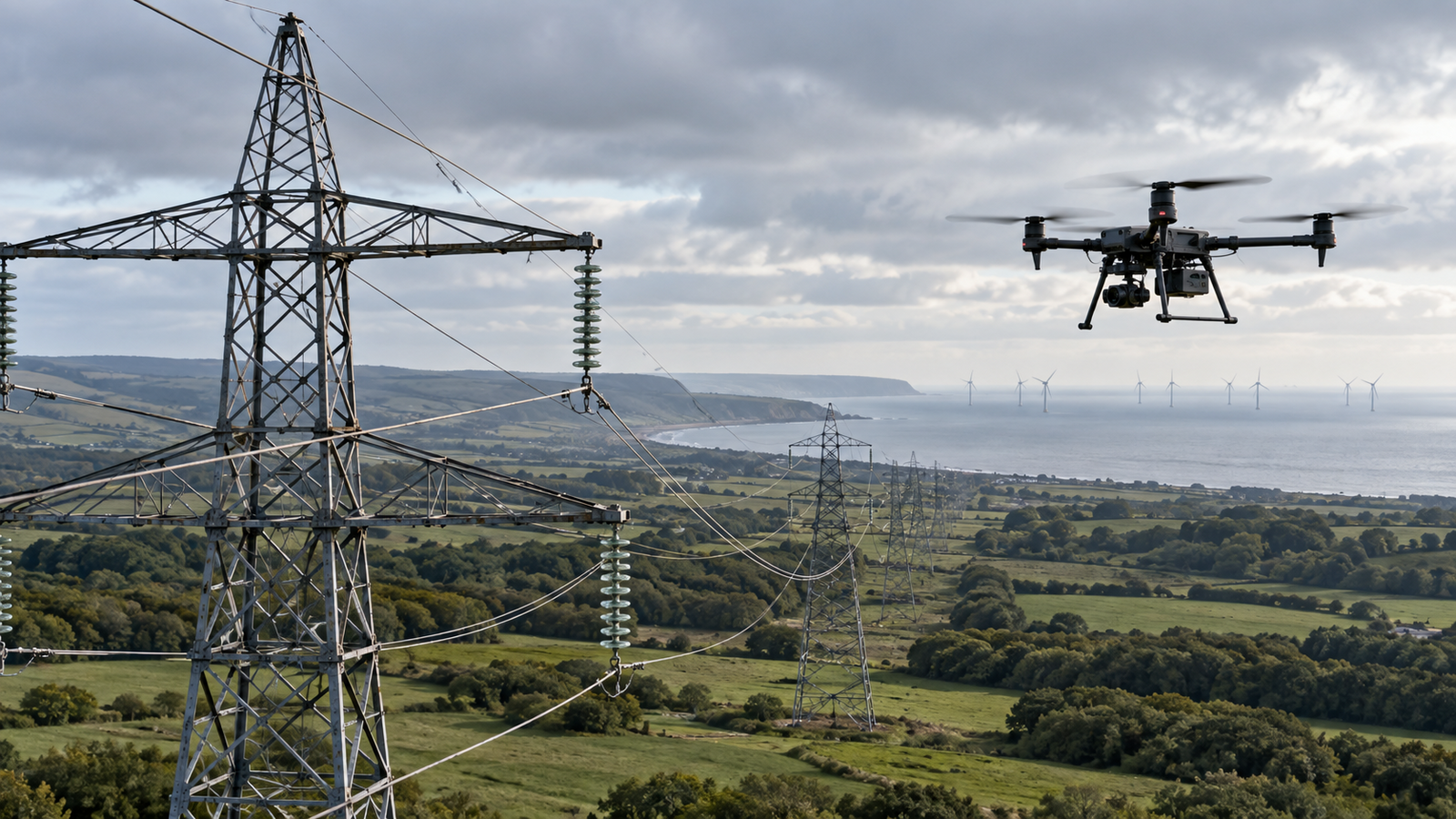
Featured image: AI-generated editorial illustration by OpenAI for All About UAVs. It depicts generic inspection equipment and is not a documentary photograph of Cyberhawk or SSE operations. No affiliate links or paid placement are included.
Leave a Reply