
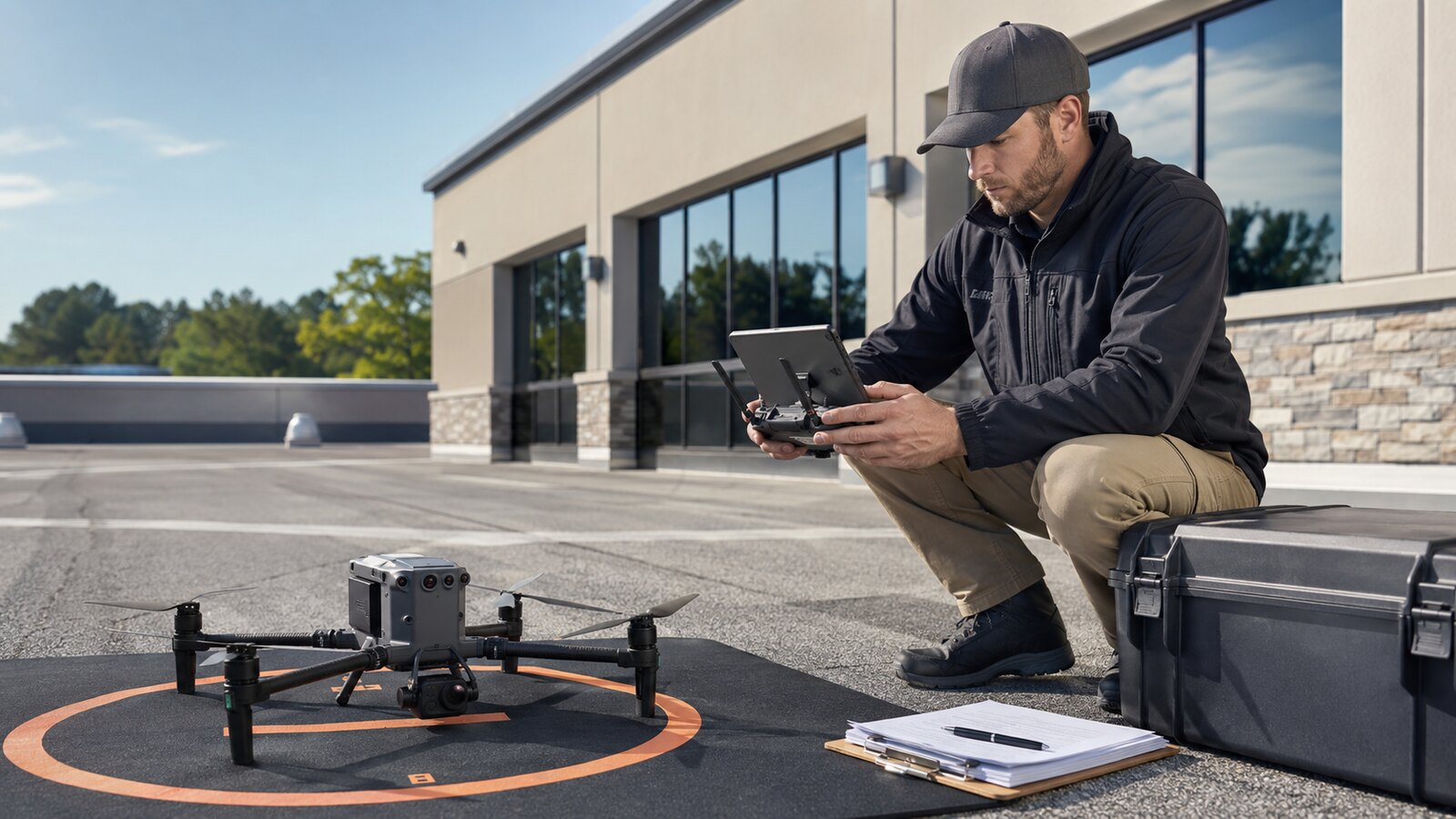
Your first drone inspection quote should do two things: give the client a clear price and protect you from doing unpaid work. The easiest way to accomplish both is to define the deliverable first, calculate every hour and expense required to produce it, and state what happens when the scope changes.
Key takeaway: Do not quote only the flight. Quote the complete field-to-client job, including planning, travel, setup, collection, processing, reporting, communication, and business overhead.
Start by asking what the client needs
A request for a “drone roof inspection” is not yet a workable scope. One client may want 20 organized photographs. Another may expect an annotated report, measurements, a thermal scan, or an engineering conclusion. Those services require different equipment, expertise, time, and liability.
Before pricing, ask:
- What property or assets must be documented?
- What decision will the client make with the results?
- Which images, data products, file formats, or reports are required?
- Does the client need measurements, annotations, thermal data, or professional interpretation?
- What are the deadline, access restrictions, safety requirements, and insurance limits?
If the client cannot answer, show them a sample deliverable. It is much easier to price a defined package than an open-ended promise to “inspect everything.”
Calculate the complete workload
Use the internal hourly target developed in our guide to pricing commercial drone work. That rate should already account for compensation, insurance, software, equipment replacement, administration, taxes, and profit.
Estimate time for client discovery, airspace and site research, mission planning, travel, check-in, setup, preflight inspection, flight operations, data backup, processing, quality control, reporting, delivery, and follow-up. Add direct expenses such as tolls, parking, specialty software, subcontractors, rented sensors, or a visual observer.
Federal rules make preflight work part of the operation—not optional overhead. Under 14 CFR 107.49, the remote pilot in command must assess local conditions, airspace, people and property, hazards, weather, aircraft performance, and control links before flight.
Worked example: a commercial roof inspection
Assume a client wants high-resolution RGB photographs of a small commercial roof, images of visible areas of concern, and a basic annotated PDF. The property is 35 miles from your office. No thermal analysis, measurements, destructive testing, or engineering opinion is included.
| Quote component | Estimate |
|---|---|
| Discovery, site research, and flight planning | $125 |
| Round-trip travel and vehicle cost | $125 |
| On-site setup and flight operations | $250 |
| Image review, annotation, and PDF report | $300 |
| Client delivery and one revision | $75 |
| Operational contingency | $75 |
| Project total | $950 |
This is an example, not a universal market price. Your actual quote should reflect local demand, risk, access, experience, equipment, reporting requirements, and cost structure. A complex facility, controlled airspace, restricted operating window, additional crew member, thermal payload, or expedited report could increase the price substantially.
Write the scope so both sides understand it
A professional quote should name the site, service date or scheduling window, capture plan, deliverables, turnaround time, and price. State how many revisions are included and how long the quote remains valid.
List important exclusions plainly. For this example, the operator might exclude thermal analysis, leak detection, code-compliance findings, structural opinions, precise measurements, areas not safely visible from the permitted operating position, and defects hidden by equipment or standing water.
This distinction matters because a drone pilot can document visible conditions without necessarily being qualified to diagnose them. If the project requires engineering, roofing, electrical, or surveying conclusions, partner with the appropriate professional and price that participation into the job.
Define weather, reflights, and changes
State that unsafe or unsuitable weather leads to rescheduling without penalty when practical. Then distinguish weather delays from client-caused return trips. A reflight should normally be billable when access was unavailable, the site changed after collection, the client requests additional assets, or the original data met the agreed scope.
Use a written change order for additional buildings, deliverables, revisions, or analysis. A simple sentence such as “Work outside this scope requires written approval and may change the price and delivery date” can prevent a small assignment from expanding indefinitely.
Set payment terms before flying
For a first-time client, consider a deposit with the balance due on delivery or within a short stated period. Specify accepted payment methods, late-payment terms where lawful, cancellation conditions, and when the client receives final high-resolution files.
Your quote does not need to reveal every internal cost calculation. The client needs a clear outcome, price, schedule, and set of responsibilities. You need confidence that the price covers the real work.
If you are still choosing a service, begin with our guide to starting a drone inspection business. Once you can describe exactly what you collect and deliver, quoting becomes much less mysterious—and much more consistent.