Disclosure: All About UAVs may earn a commission from qualifying purchases made through links in this article, at no additional cost to you. Recommendations are based on the criteria explained here.
Starting a drone inspection business requires more than earning a pilot certificate and buying an aircraft. The strongest operators choose a specific problem to solve, build a repeatable field-to-client workflow, and price the entire service—not merely the minutes spent flying.
Key takeaway: Begin with one inspection specialty, one clearly defined deliverable, and equipment you can support reliably. Validate demand before investing in expensive thermal, zoom, LiDAR, or survey-grade systems.
1. Choose an inspection market
“Drone inspections” can mean roof photography, construction documentation, solar thermography, utility patrols, tower imagery, industrial asset inspection, or mapping. Each specialty has different hazards, sensors, software, reporting expectations, and buyers.
Start where you already understand the assets or can work with a qualified subject-matter expert. A drone pilot can collect excellent images without being qualified to diagnose structural, electrical, roofing, or engineering defects. Define whether you are delivering organized data, an annotated observation report, or a professional assessment completed with an appropriate specialist.
2. Establish the legal and business foundation
In the United States, nearly all non-recreational small-drone operations fall under 14 CFR Part 107. The person acting as remote pilot in command generally needs a Remote Pilot Certificate and current aeronautical knowledge. The FAA’s commercial-operator guidance also directs operators to register each aircraft used under Part 107 and comply with Remote ID requirements when applicable. Pilots still preparing for certification can use our verified Part 107 exam-preparation guide.
Create a separate business entity if it suits your legal and tax situation, open a business bank account, and use written contracts. Insurance requirements vary by client and operation, but prospective customers may request aviation liability, general liability, or professional liability coverage. Discuss the actual service with a qualified insurance agent and attorney rather than assuming a generic policy covers aviation work or analytical conclusions.
3. Build a minimum viable equipment kit
Your first aircraft should reliably produce the deliverable clients will buy. A standard RGB camera may be sufficient for roofs, façades, and construction progress. Thermal, high-zoom, multispectral, RTK, or LiDAR systems should be justified by a client requirement—not purchased simply to appear more professional.
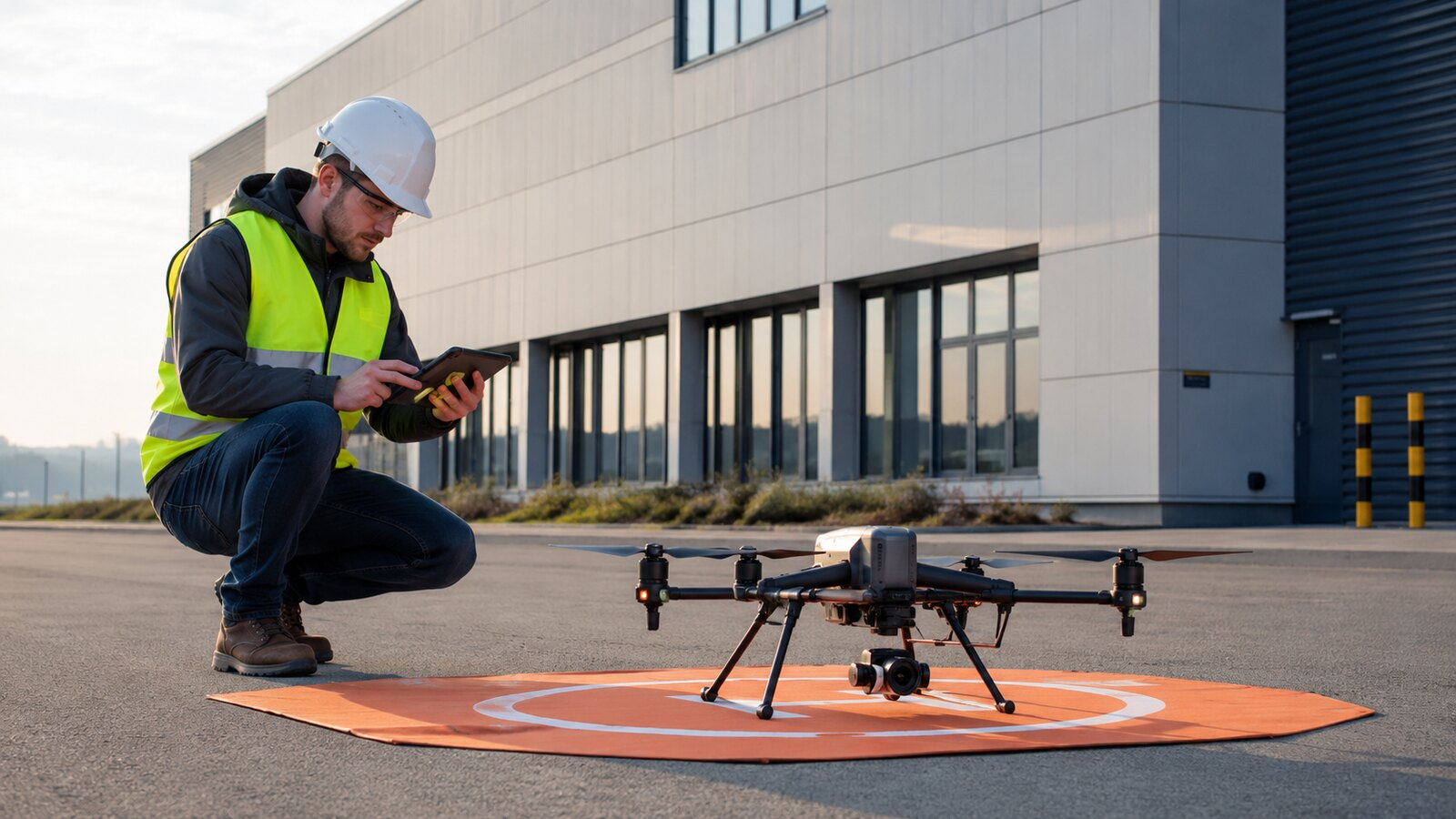
Plan for multiple batteries, compatible memory cards, charging capability, spare propellers, weather protection, and organized transport. Useful field accessories include a weighted landing pad, high-visibility safety vest, handheld anemometer, water-resistant equipment case, and high-endurance microSD cards. Check aircraft-manufacturer compatibility before buying batteries, storage media, chargers, or accessories.
4. Create a repeatable operating workflow
Professional work begins before arriving on site. Review the requested outcome, property access, airspace, required authorization, weather, notices to air missions, obstacles, people, traffic, electromagnetic interference, launch areas, and emergency landing options.
Federal rules require the remote pilot in command to check that the small unmanned aircraft system is safe before each flight and to complete the preflight familiarization and inspection required by Section 107.49. Turn those requirements into documented checklists rather than relying on memory.
For every service, define a capture plan: required angles, distances, overlap, asset identifiers, file naming, image-quality checks, and conditions that trigger another flight. Back up the data before leaving when practical. A repeatable process reduces missed shots and makes recurring work easier to compare.
5. Design the deliverable before selling the flight
Clients rarely need “drone footage.” They need evidence that supports a maintenance, construction, insurance, or planning decision. Show a sample deliverable before quoting: organized photographs, an annotated PDF, a progress comparison, an orthomosaic, a 3D model, or structured asset records.
Your scope should identify what is included, excluded, and retained. State turnaround time, file formats, revision limits, weather policy, reflight charges, data ownership, storage period, and whether raw files are delivered. Never label a mapping product a survey or promise engineering conclusions unless the work is completed under the required professional authority.
6. Price and validate the service
Calculate planning, travel, setup, flight operations, processing, reporting, client communication, equipment depreciation, software, insurance, taxes, and profit. Then present a clear project price tied to the deliverable. Charging only for flight time is a common path to underbidding.
Before making a major equipment purchase, speak with property managers, contractors, roofers, solar companies, utilities, or inspection firms in your chosen niche. Offer a tightly scoped pilot project, document the workflow, and ask whether the result helped them make a faster or better decision. That feedback is more valuable than building a large fleet before proving demand.
A practical 90-day starting plan
During the first month, choose the specialty, confirm regulatory requirements, build sample deliverables, and calculate your costs using a defensible model such as the one in our commercial drone pricing guide. During the second, practice the workflow on authorized sites, create contracts and checklists, obtain suitable insurance, and assemble a portfolio. During the third, contact a focused list of local buyers and sell one defined service.
The goal is not to offer every drone service. It is to become dependable at solving one expensive, recurring problem—and then expand only when client demand justifies the next capability.