Certified drone pilots work in far more settings than aerial photography. The FAA’s 2026 UAS forecast reported 493,396 remote-pilot certifications at the end of 2025 and projected 628,600 by 2030. That forecast describes certificate growth and potential opportunities—not guaranteed job openings. For pilots choosing a specialty, these seven industries show where drones are already being used for practical work.
1. Construction and Infrastructure
Construction teams use drones for progress documentation, site mapping, stockpile measurement, and visual inspection. The FAA’s 2025 Part 107 operator survey identified construction as one of the sectors with notable reported activity. Employers and clients may also expect jobsite-safety training and competence with mapping or inspection software.
2. Energy and Utilities
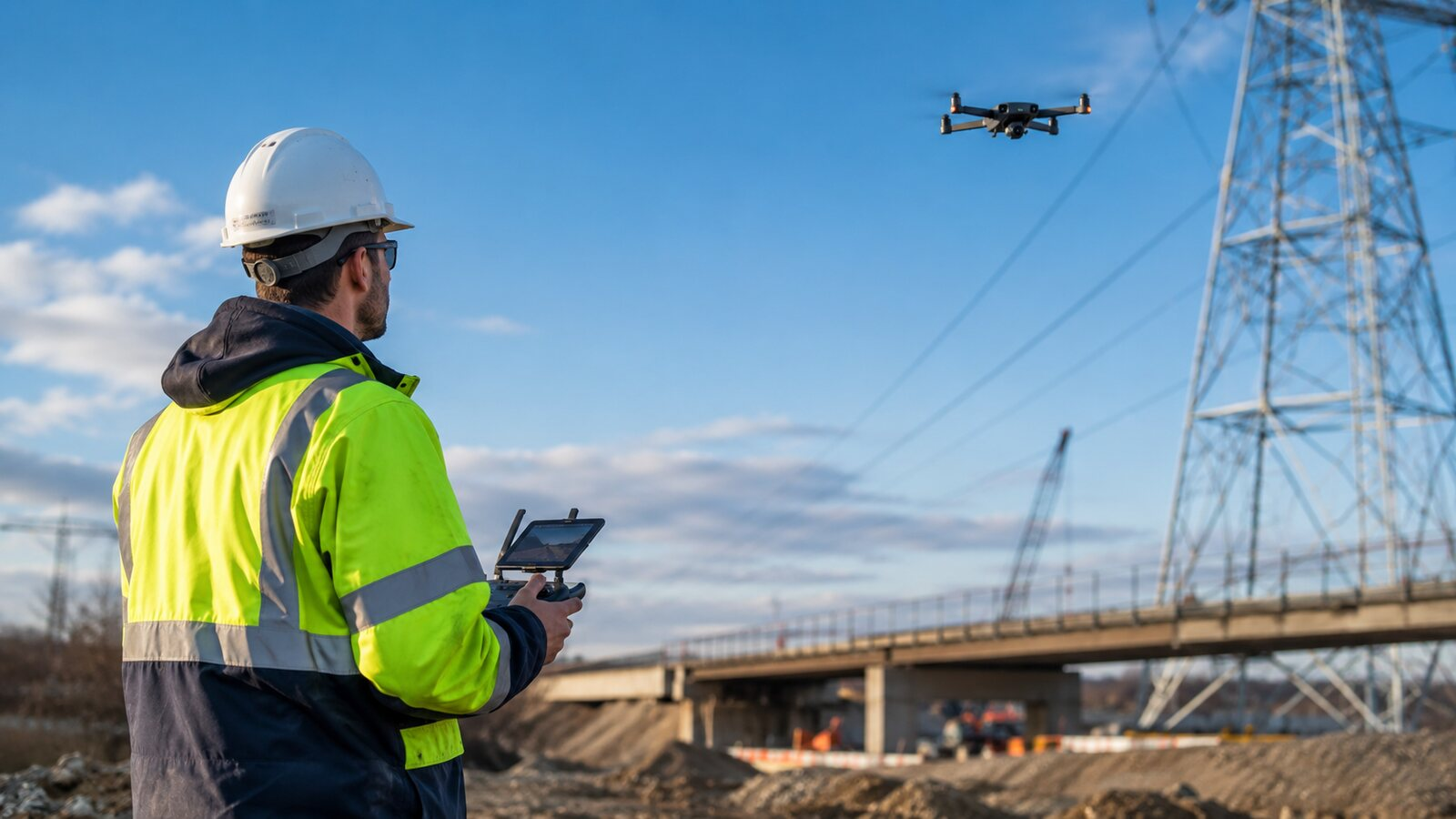
Utilities and contractors use small UAS to inspect power lines, substations, solar arrays, wind turbines, pipelines, and related assets. Thermal or zoom payloads can be valuable, but the pilot still needs the right airspace approval and operating authority. Long linear missions may require a BVLOS waiver or another FAA authorization; Part 107 certification alone does not authorize BVLOS flight.
3. Agriculture
Drone work in agriculture includes crop scouting, stand counts, field mapping, and livestock observation. Dispensing pesticides, fertilizer, seed, or other regulated agricultural products is a different operation: the FAA says it generally falls under Part 137 and may also require exemptions or other approvals. See our Part 137 compliance overview and confirm the current requirements with the FAA before offering spraying services.
4. Insurance and Damage Assessment
Insurers, adjusters, and inspection vendors can use drones to document roofs and property damage while reducing the need to place people on unstable structures. Useful skills include repeatable image capture, accurate records, privacy awareness, and an understanding of the client’s evidence standards. Availability and pay vary by company, region, and storm activity.
5. Public Safety
Fire, law-enforcement, emergency-management, and search-and-rescue organizations use UAS for situational awareness, thermal search, scene documentation, and incident response. The FAA survey specifically reported law-enforcement and emergency-response activity. These positions often require agency training, privacy and evidence procedures, and incident-command familiarity in addition to pilot qualifications.
6. Real Estate and Media
Property marketing, construction updates, tourism, events, and video production remain common entry points. A Part 107 certificate covers the pilot requirement for qualifying small-UAS operations, but clients usually hire for the finished product. Composition, editing, dependable delivery, airspace planning, and permission to use locations or people’s likenesses can matter as much as flight skill.
7. Surveying, Mapping, and GIS
Engineering, environmental, and land-development teams use drone imagery to build orthomosaics, elevation models, and site maps. Photogrammetry and GIS skills are central. A drone pilot should not present work as a legal boundary survey unless the work is performed under the professional licensing rules that apply in that state.
How to Choose a Specialty
Start with the industry you already understand. A construction background can make jobsite inspection easier to learn; GIS experience translates well to mapping; public-safety work benefits from incident-response knowledge. Then study the sensor, deliverable, safety rules, and professional standards that sector expects.
A Certificate Is the Baseline
Most civil small-UAS work begins with the FAA Part 107 Remote Pilot Certificate, but certification is not a promise of employment or blanket authority for every mission. Build a small portfolio, learn the client’s workflow, verify state and local professional requirements, and add specialized training only after identifying the work you want to perform.