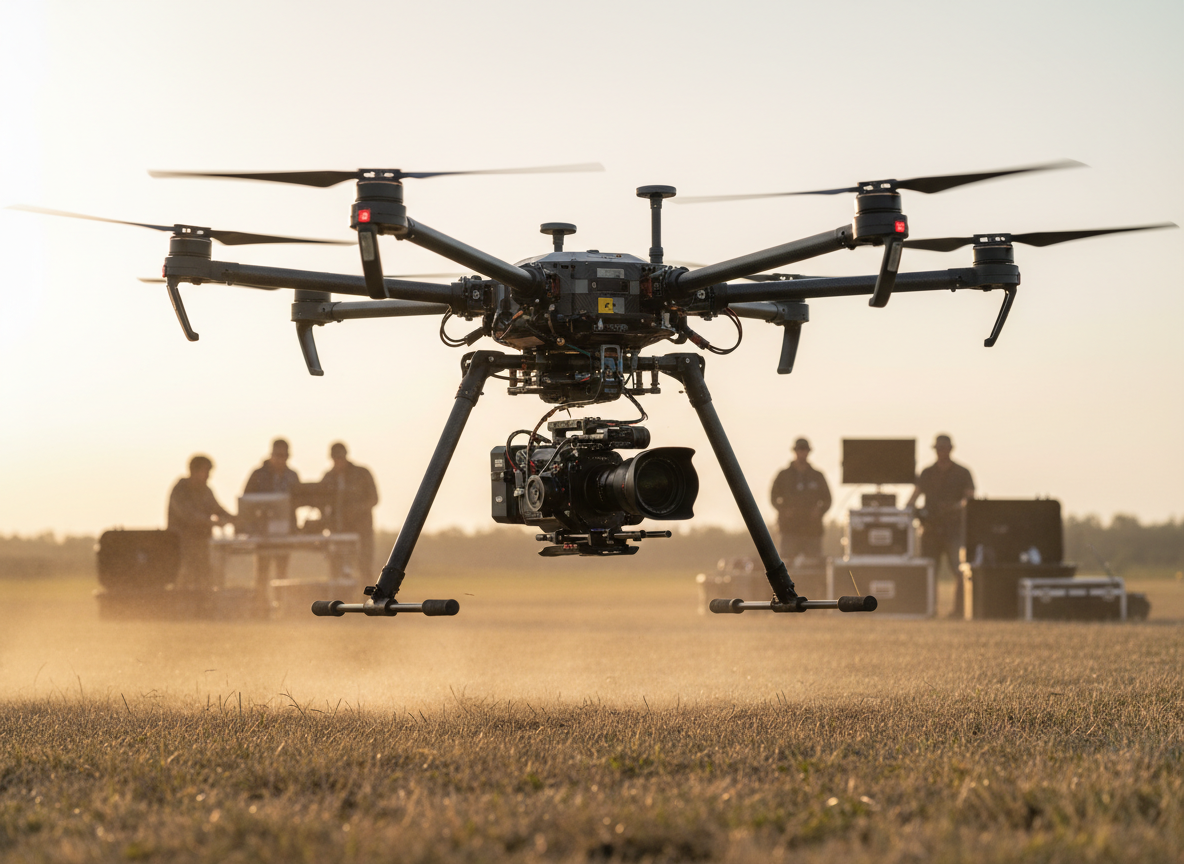
Drone Nerds added the Freefly Systems Alta X Gen2 to its enterprise portfolio in February 2026, taking pre-orders in both standard and NDAA-compliant configurations, and as of September 2026 Freefly’s own store lists both versions in stock. It’s not a new airframe — it’s the proven Alta X carbon-fiber platform, in production since 2019, paired with the Skynode flight controller and smart payload interfaces first introduced on Freefly’s Astro Max. That combination is the whole story here: familiar hardware, new brains.
Alta X Gen2 specifications
| Spec | Value |
|---|---|
| Payload capacity | 15.1 kg (33.3 lb) rated per reseller spec sheets; Freefly markets up to 35 lb via the 12 mm rail system |
| Max gross takeoff weight | 34.9 kg (about 77 lb) |
| Empty weight | 11.2 kg |
| Flight controller | Custom Skynode (shared with Astro Max) |
| Autonomy software | Auterion Enterprise PX4 with fleet management; Freefly AMC software for telemetry and mission planning |
| Payload interface | Smart Dovetail quick-connect (up to 1.5 kg on the isolated mount); internal bay with Ethernet, regulated power, LTE |
| Power | Dual onboard 12V and 24V regulators |
| Environmental rating | IP43-equivalent; -20°C to +50°C operating range |
| Controller | Freefly Pilot Pro with Herelink radio (standard) or Doodle Labs radio (NDAA version), preconfigured |
| Compliance | Standard Remote ID pre-installed; NDAA-compliant version available; DIU Blue UAS approval for the Gen2 airframe listed by Freefly as in process (controller and NDAA radio already compliant) |
| Compatible payloads | Flux LiDAR, Sony LR1, Sentera sensors, thermal options, Môvi Pro cinema gimbal, third-party Dovetail-mount sensors |
| Price (As of September 2026) | $39,650 standard; $45,650 NDAA version. Batteries and chargers sold separately |
What’s actually new versus the original Alta X
The airframe, rotor layout, and skid landing gear are unchanged from an Alta X that’s been in the field since 2019 — that’s a selling point, not a shortcoming, since it means Gen2 inherits years of field reliability data rather than launching as an unproven design. The original Alta X was named to the Defense Innovation Unit’s Blue sUAS 2.0 list in 2022 and, per Freefly, has since transitioned to the AUVSI Green List; the Gen2 airframe’s own Blue UAS approval is still listed as in process, so government buyers with a hard Blue UAS requirement should confirm status before ordering. The real upgrade is underneath: the Skynode controller brings better GPS-denied resilience and intelligent failsafes, and the Smart Dovetail interface with its Ethernet, regulated power, and LTE pathways turns payload integration from a custom wiring job into a quick-connect swap.
How it compares
At $39,650 (As of September 2026), the Alta X Gen2 sits well above enterprise multirotors like DJI’s Matrice series or Autel’s EVO Max line, both of which run a fraction of that price with far less payload capacity. That gap is the point: this isn’t competing with an inspection drone, it’s competing with other heavy-lift cinema and industrial platforms where a 33-plus pound payload capacity is table stakes, not a luxury. Within that narrower category, the NDAA-compliant version (a $6,000 premium) is a meaningful differentiator for government and defense buyers who are locked out of Chinese-made heavy-lift platforms entirely. The regulatory gap is widening, too: foreign-made drones and components were added to the FCC Covered List in December 2025, and the FCC’s pending “military-grade” proposal (PS Docket 26-189) would go further for foreign-produced drones of 55 lb or more, among other categories. As of September 30, 2026, that proposal has not been adopted as a final rule, and as a U.S.-built platform the Alta X Gen2 falls outside its foreign-produced scope.
Budget and regulatory realities
The sticker price is not the system price. Batteries and chargers are sold separately, and Freefly recommends multiple battery sets and a dual-channel charger per aircraft, so budget for those on top of the airframe. Weight matters for your paperwork as well: with a maximum gross takeoff weight of about 77 lb, a heavily loaded Alta X Gen2 can exceed the 55-lb limit of FAA Part 107. Flights at 55 lb or more generally require separate FAA authority, such as a Section 44807 exemption, so plan your payload weights and approvals before you plan your shoot.
Where it fits
- Good fit: cinema and broadcast operators running heavy gimbal rigs who need genuine payload headroom, not a drone stretched to its limit
- Good fit: government, utility, and defense-adjacent buyers who need NDAA compliance and can’t consider DJI or Autel regardless of price
- Good fit: integrators building custom sensor payloads (LiDAR, multi-sensor pods) who need the Ethernet/power/LTE bay rather than a bolt-on gimbal mount
- Poor fit: standard inspection or mapping work — a Matrice or EVO Max-class platform does that job at a fraction of the cost, and the Alta X Gen2’s extra lift capacity goes unused
Bottom line
The Alta X Gen2 is a smart upgrade for anyone already committed to the Alta X ecosystem or genuinely needing 30-plus pounds of lift — it’s not a general-purpose enterprise drone, and buyers should be honest with themselves about whether their mission actually requires that much payload (and the extra FAA paperwork above 55 lb) before paying for it.
Sources
- XTI Aerospace: Drone Nerds adds Freefly Alta X Gen2 (Feb. 5, 2026)
- Freefly Systems: Alta X Gen2 product page
- Freefly Systems: Alta X Gen2 (NDAA) product page
- DroneFly: Alta X Gen2 specifications and pricing
- Freefly Systems: DIU Blue List and transition to AUVSI Green List
- Advexure: Freefly Alta X history and Gen2 evolution
- Holland & Knight: FCC moves to restrict foreign-made drones
Leave a Reply