EagleNXT, then operating as AgEagle Aerial Systems, launched the MicaSense RedEdge-P Green in August 2025 as a companion sensor to its existing RedEdge-P camera, aimed at late-season crop monitoring and environmental research. It’s NDAA-compliant, built in the U.S., and can fly on its own or pair with the standard RedEdge-P (and optionally RedEdge-P Blue) for 10 or 15 combined spectral bands.
RedEdge-P platform specifications
| Spec | Value |
|---|---|
| Weight (single camera + DLS 2) | 300 g (10.6 oz) |
| Weight (dual-camera kit) | 745 g (26.2 oz) |
| Standard RedEdge-P bands | Blue (475nm), green (560nm), red (668nm), red edge (717nm), near-IR (842nm), plus panchromatic |
| RedEdge-P Green bands | Cyan (502nm), green (550nm), yellow (570nm), red (678nm), near-IR (754nm), plus panchromatic |
| Combined bands | 5 standalone; 10 paired with a RedEdge-P; 15 with RedEdge-P plus RedEdge-P Blue |
| Resolution | 1.6 MP per multispectral band; 5.1 MP global-shutter panchromatic |
| Ground sample distance | 7.7 cm/pixel (multispectral) at 120m AGL; 3.98 cm/pixel panchromatic; pan-sharpened to 2 cm at 60m |
| Capture rate | Up to 3 raw DNG captures per second |
| Storage | CFexpress card |
| Price (As of October 2026) | $8,995 for the Green multispectral kit at U.S. dealers DSLRPros and Dronefly (both listed as sold out); $8,495 sensor-only at Adorama (special order) |
| Compliance | NDAA-compliant; designed and built in the USA by EagleNXT |
| Compatible platforms | DJI Skyport-equipped drones (e.g., Matrice 350 RTK), Ascent AeroSystems SPIRIT/SPARTAN, WISPR SkyScout Series |
What the Green camera actually adds
The standard RedEdge-P’s five bands are optimized for the vegetation indices growers rely on early and mid-season, like NDVI and NDRE. The Green camera’s pigment-focused bands — cyan, green, yellow, red and a shorter near-IR — target what changes later in the crop cycle: chlorophyll, carotenoid and flavonoid content, and indices like the Plant Senescence Reflectance Index (PSRI) that track canopy yellowing and dieback. EagleNXT says buyers run it standalone as well as in dual and triple arrays, but the strongest value case is as an upgrade path for operators who already own a RedEdge-P and want late-season sensitivity on top of their existing bands.
Who actually needs 10-15 bands
Most commercial spray and scouting operations do fine with the standard RedEdge-P’s five bands for the bulk of a season — the extra bands matter most for research programs, university extension work, and high-value specialty crops where late-season stress detection (drought, disease, nutrient deficiency showing up as senescence) directly affects a harvest decision. A commodity row-crop operator running routine NDVI scouting is unlikely to see enough return from the added bands to justify roughly doubling camera weight and adding close to $9,000 in sensor cost; an agronomy research team tracking canopy decline through harvest is a much better fit.
How it compares
The integrated multispectral alternatives most growers once compared against — DJI’s P4 Multispectral and Parrot’s Sequoia — have been discontinued, and DJI’s current Mavic 3 Multispectral pairs four multispectral bands with an RGB camera in a single airframe. For U.S. buyers, DJI’s December 2025 addition to the FCC Covered List also means new DJI models can’t receive FCC authorization, which makes a platform-agnostic, NDAA-compliant sensor more attractive. The RedEdge-P line’s modularity is the differentiator: a MicaSense sensor can be mounted across multiple drone platforms, including U.S.-made airframes, and adding the Green camera is an incremental spend rather than a full sensor replacement. That flexibility comes at the cost of a heavier combined payload and more setup complexity than an all-in-one integrated system, which will matter more to a solo operator than to a research team with dedicated flight crew.
Bottom line
The RedEdge-P Green is a sensible, targeted upgrade for existing RedEdge-P owners doing late-season or research-grade crop monitoring. It can fly on its own, but most growers won’t need it as a standalone buy, and the value case depends on whether late-season senescence tracking is already part of your workflow. Dealer stock is thin as of October 2026, so confirm lead times before planning around a specific season.
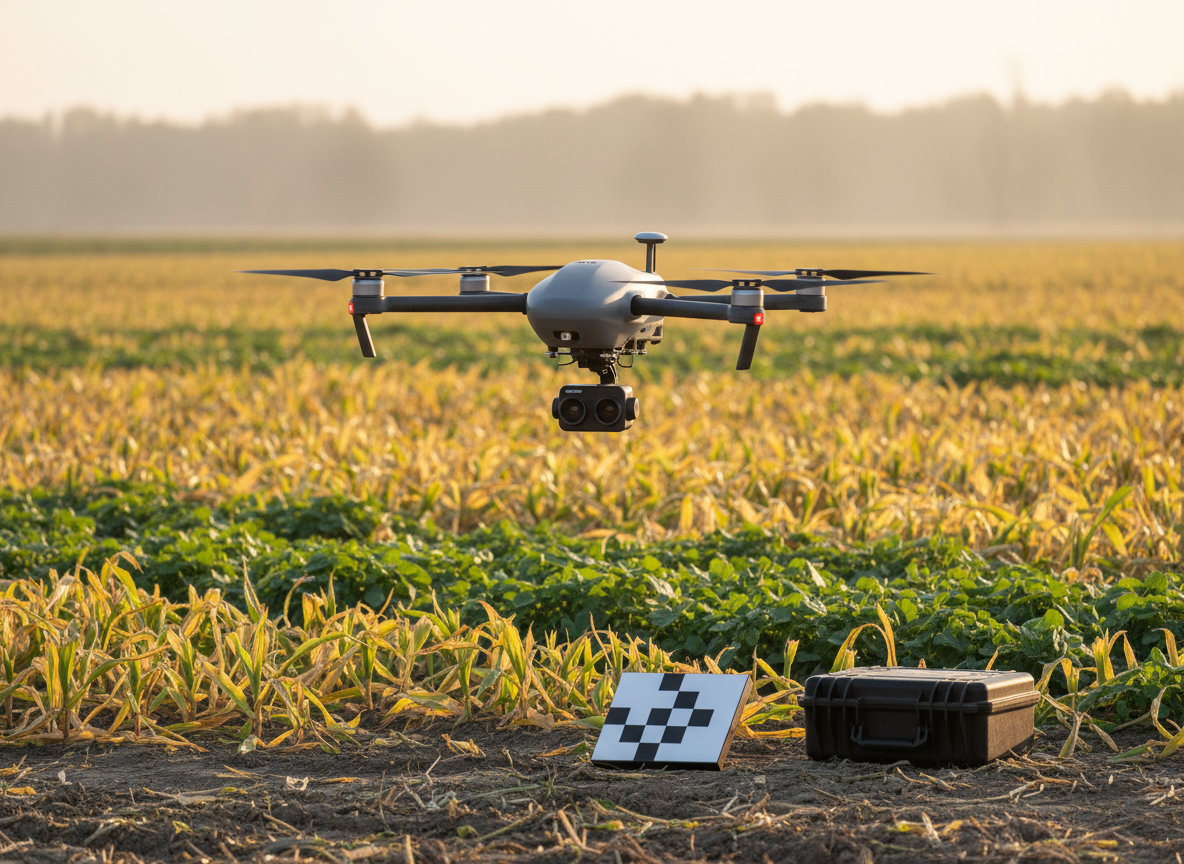
Disclosure: This article is an independent specification-based assessment, not a hands-on test. EagleNXT did not sponsor or control the editorial conclusions. The featured image is an original AI-generated editorial illustration of generic, unbranded equipment—not a photograph of the RedEdge-P Green or a specific supported aircraft.
Leave a Reply