
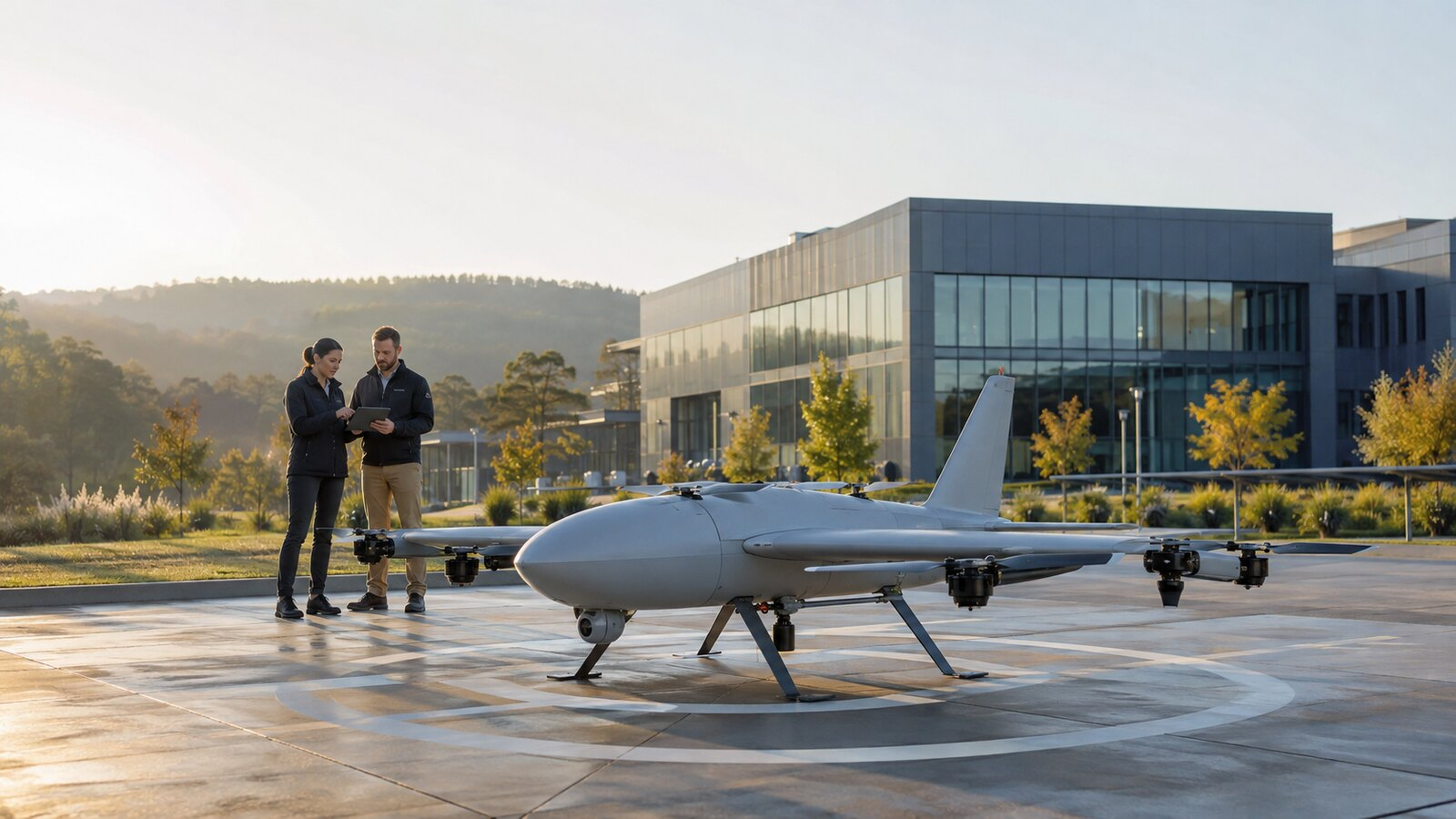
Quantum-Systems Inc. opened a 3,200-square-foot engineering and research office in Huntsville, Alabama, adding a U.S. development hub near major defense customers and aerospace partners. The office is already operational, according to the company’s August 24 announcement.
Key takeaway: this is an engineering and customer-collaboration expansion—not a newly announced assembly plant. Quantum Systems says the Huntsville team will help turn operational feedback into unmanned-system development, but the company did not disclose headcount, investment, production capacity or specific programs.
What Quantum Systems opened in Huntsville
The new office is located in Upland Park next to Cummings Research Park. Quantum Systems described the 3,200-square-foot location as an engineering and R&D facility intended to expand its U.S. technical capabilities and place staff closer to defense customers and partners.
In its official announcement, the company identified aerodynamics, flight controls, computer vision, autonomy, cloud infrastructure, simulation and manufacturing engineering among its development capabilities. That description concerns company-wide expertise; it does not establish that every discipline will be staffed at the Huntsville office.
CEO Dave Sharpin said the location should help the company work more closely with customers, expand its engineering team and accelerate development. The office will support customer collaboration and what Quantum Systems calls “next-generation unmanned intelligence capabilities.” Those descriptions are company statements rather than independently measured performance results.
The expansion is centered on defense requirements
The initial lead described the office as supporting commercial and public-safety UAS, but Quantum Systems’ announcement emphasizes defense customers and mission requirements. The company remains a dual-use manufacturer with commercial geospatial products, yet the stated purpose of this Huntsville location is closer engineering engagement with the U.S. defense ecosystem.
Huntsville provides access to U.S. Army organizations, aerospace primes, research institutions and a growing group of drone and counter-UAS companies. An independent report from Defence Industry Europe similarly characterized the office as a development hub designed to shorten the path between operator feedback and engineering decisions.
What the announcement does not establish
Quantum Systems did not announce new Huntsville assembly capacity, a factory production target or a domestic-content percentage. It also did not identify contracts, program awards or customer commitments associated with the office.
That distinction matters as drone companies increasingly frame U.S. expansion around domestic manufacturing and secure supply chains. An engineering office can influence product design, software development, integration and customer support, but it should not be counted as new manufacturing capacity without additional evidence.
The release also does not specify how many employees currently work at the site or how quickly the team will grow. Those details will determine whether the office becomes a substantial engineering center or remains a smaller customer-facing development presence.
Why operator-driven development matters
Unmanned systems used in demanding government missions often evolve through short feedback loops. Operators identify problems involving flight controls, payload integration, networking, software workflows, training or sustainment; engineering teams then convert those observations into testable changes.
Locating engineers near customers can reduce the delay between a field issue and a design decision. It can also improve demonstrations, integration work and technical support. Whether the Huntsville office produces those benefits at scale will depend on staffing, program access and the authority its engineers have to influence the company’s product roadmap.
What to watch next
Watch for hiring announcements, named U.S. programs, local university partnerships and evidence that Huntsville work is moving into tested hardware or software releases. Any later announcement of assembly, manufacturing or production capacity should be evaluated separately from this engineering-office opening.
The development also fits the broader U.S. emphasis on domestic drone capability and allied supply chains. Readers can follow related coverage in the Technology & Innovation archive and our analysis of the White House Drone Dominance summit.