
A U.S. Army Europe and Africa air-defense unit has completed a five-day assessment of the FD-1 interceptor in Poland, using the event to develop the training and certification procedures needed to employ first-person-view drones against massed unmanned-aircraft threats.
What the Army assessed
The 5th Battalion, 4th Air Defense Artillery Regiment conducted Operation Audacious Fury from November 2 through 6 at the Ustka Training Area. The battalion’s Tactics, Integration and Employment Battery led the internal assessment, which focused on the FD-1’s potential as a lower-tier kinetic option against Group 1 through Group 3 drones.
The Army framed the problem as “magazine depth”: preserving scarce, expensive air-defense missiles for threats that require them while adding less costly interceptors for larger numbers of smaller drones. That is an operational objective, not a public finding that the FD-1 has already met a defined cost-per-kill threshold.
Training was a central result
The official account emphasizes operator development as much as hardware performance. Soldiers worked on tactics, techniques and procedures and a training-table certification process intended to take an operator with no FPV-drone experience to a repeatable level of proficiency.
The battalion plans to use personnel from the TIE Battery as trainers for other U.S. Army Europe and Africa units. That signals an effort to standardize how interceptor drones are operated and how engagements are managed. It does not establish that the FD-1 has been selected for Army-wide fielding.
What is known about the FD-1
Mountain Horse Solutions describes the FD-1 as a compact, single-operator interceptor that can work behind an existing detection-and-tracking layer or as a standalone system. The manufacturer says a human authorizes each engagement and markets the aircraft for Group 1–3-plus aerial targets as well as ground targets.
Those are manufacturer claims. The Army’s November 6 release did not publish intercept rates, target profiles, electronic-warfare conditions, unit cost, range, endurance or a comparison with competing systems. It also did not say how many live targets were engaged or whether every trial objective was met.
Independent reporting from Janes says the Army ordered an initial 300 FD-1 interceptors and then 385 more after an operational assessment led to hardware changes. Janes reported that the revised version added thermal cameras and improvements to range and endurance. Contract value was not publicly disclosed.
Why the Poland assessment matters
The assessment moves the story beyond a vendor demonstration or acquisition announcement. An operational air-defense battalion in Europe is now working through the harder questions of operator training, certification, tactics and integration into a layered defense.
That matters because interceptor drones are not self-contained air-defense systems. Their usefulness depends on warning time, target identification, command-and-control links, airspace coordination, trained operators and rules for authorizing an engagement. A fast interceptor without reliable cueing or disciplined engagement procedures can create new risks around friendly aircraft and populated areas.
The Army’s assessment also fits a wider push to expand lower-cost counter-UAS options. NATO opened a counter-drone procurement marketplace on November 5, but neither initiative proves that one architecture or interceptor is suitable for every base, border or maneuver formation.
What remains unresolved
- Whether the Army will expand FD-1 fielding beyond current orders and assessments.
- How the interceptor performs against representative Group 1–3 targets under electronic attack.
- The complete cost of sensors, command-and-control, training, spares and interceptors—not only the aircraft.
- How engagement authority and airspace deconfliction will work outside controlled training ranges.
The practical milestone is that a European air-defense unit has completed an assessment and built a training pathway. Claims about operational effectiveness, scale and affordability should wait for fuller test data and fielding decisions.
Sources and disclosure
Primary source: U.S. Department of Defense Visual Information Distribution Service, November 6, 2026 (official Army account indexed under “U.S. Army Air Defenders In Europe Assess C-UAS Interceptor”). Supporting sources: Janes on the FD-1 follow-on order and Military Embedded Systems on the second Army order.
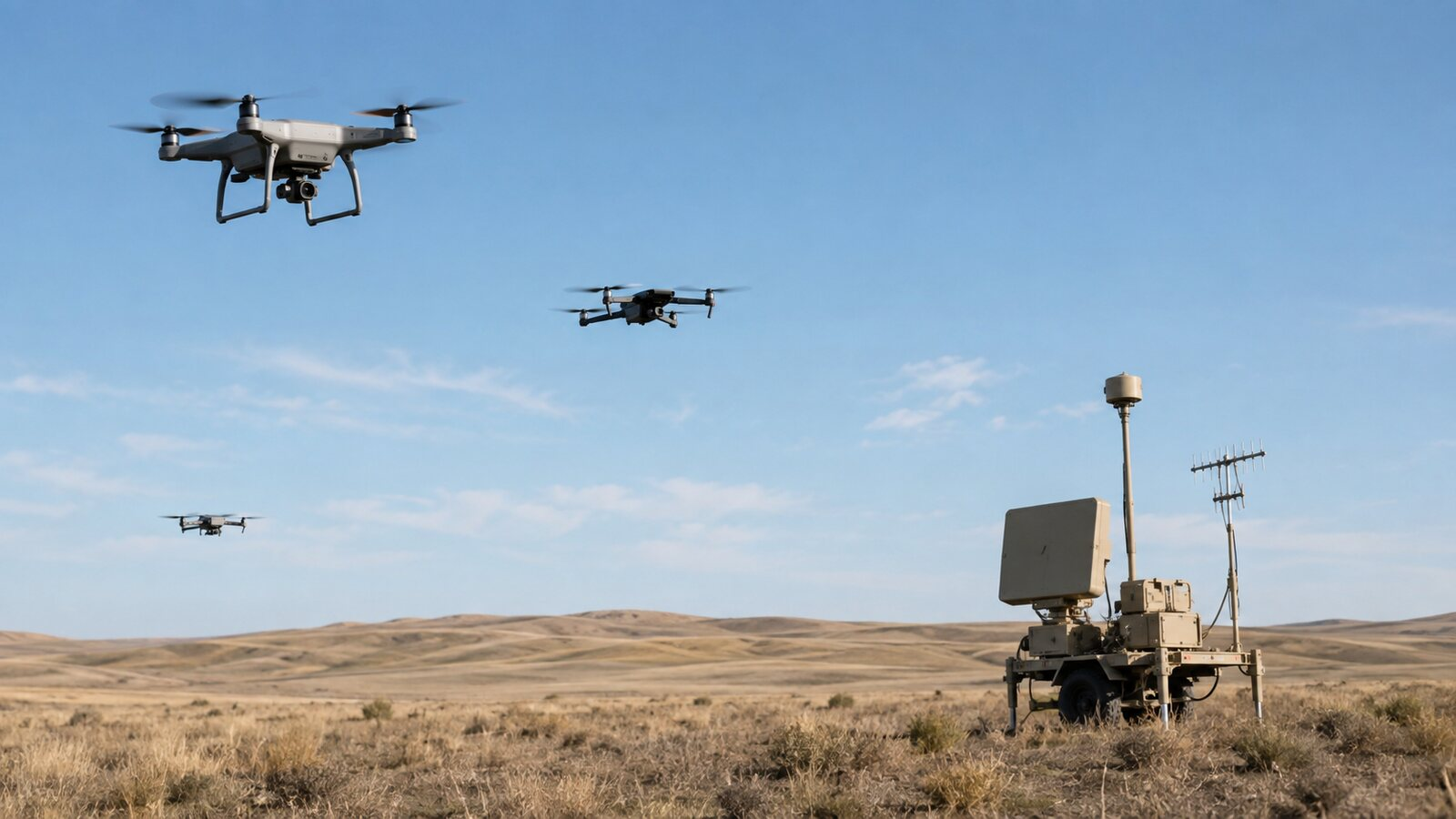
All About UAVs has not tested the FD-1. Performance statements attributed to the Army, manufacturer or third parties have not been independently reproduced. The featured image is an AI-generated conceptual illustration of counter-UAS training and does not depict the FD-1, Operation Audacious Fury or Ustka Training Area. The Army and named companies did not sponsor, review or control this article.
Leave a Reply