
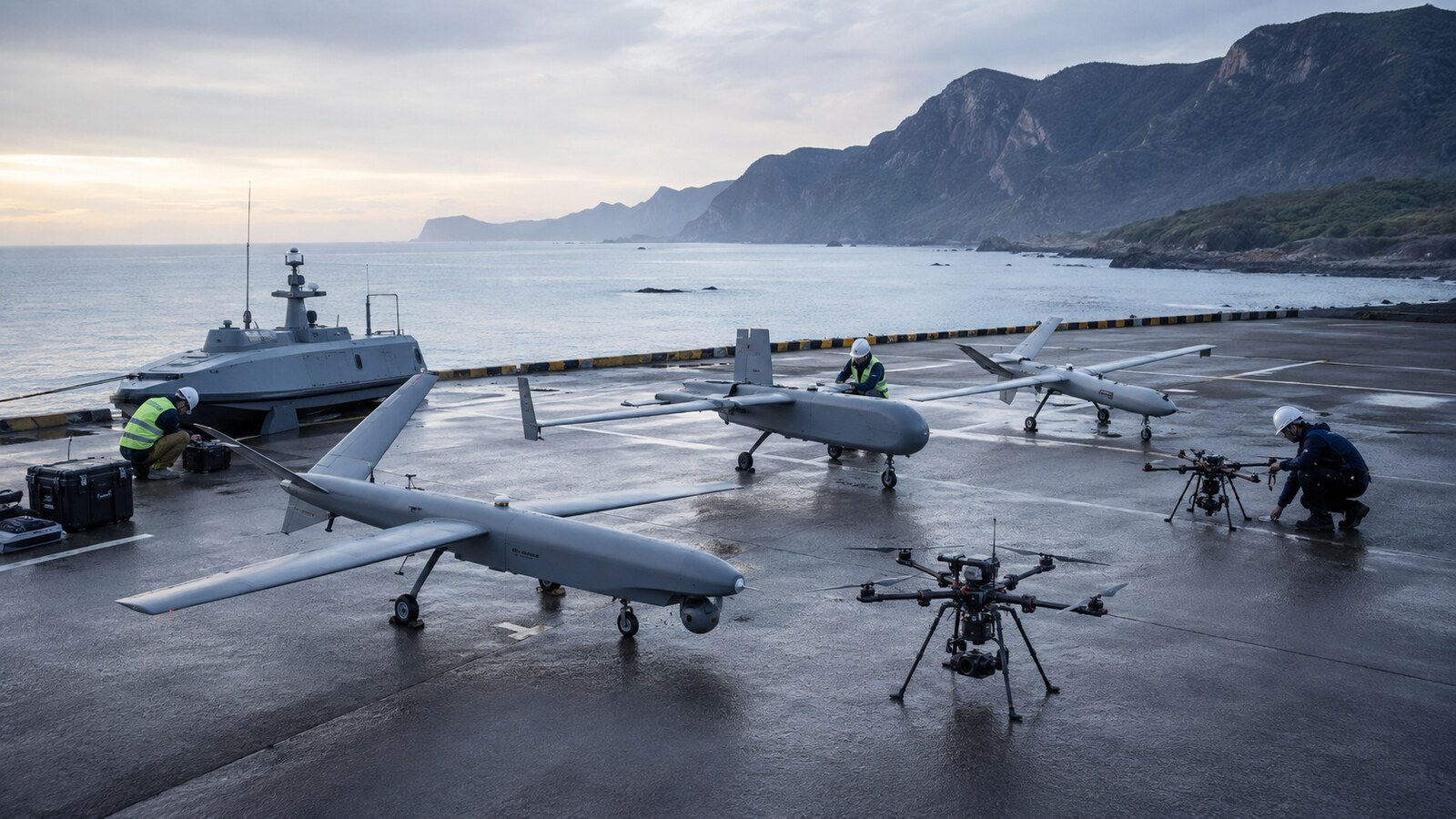
Three developments are reshaping the drone landscape this morning: Taiwan is expanding its inventory of U.S.-made military drones, U.S. regulators are approaching two consequential deadlines for foreign-made UAS, and the Army has confirmed a high-energy laser engagement against cartel-linked drones at the southern border.
Taiwan orders more than 2,000 Anduril ALTIUS drones
Taiwan’s Ministry of National Defense has announced a contract valued at approximately NT$26.9 billion (about US$847 million) for 2,032 Anduril ALTIUS systems. The package includes 1,554 ALTIUS-700M loitering munitions and 478 ALTIUS-600ISR reconnaissance drones.
According to Taiwan News’ report on the government procurement disclosure, initial deliveries are expected in the fourth quarter of 2026, with the full order scheduled for completion by June 2033. A separate U.S. Defense Security Cooperation Agency notice confirms the proposed package includes ALTIUS-700M loitering munitions, ALTIUS-600 ISR systems and associated equipment and support. The acquisition strengthens Taiwan’s asymmetric-defense strategy by combining reconnaissance and strike systems without exposing a crewed aircraft to the same level of risk.
The order also illustrates a broader shift in defense procurement. Governments are increasingly buying uncrewed systems in significant quantities, treating them as an operational layer rather than a small experimental fleet. For the UAS industry, that creates demand not only for aircraft but also for training, communications, maintenance, autonomy and supply-chain capacity.
FCC keeps September 2 deadline for drone-rule comments
The Federal Communications Commission has kept its September 2, 2026 deadline for comments on a proposal affecting certain previously authorized foreign-produced drones and critical components. Requests for an extension from DRONERESPONDERS and the Commercial Drone Alliance were denied, according to DroneLife.
The proposal is important, but it should not be described as a blanket prohibition on every foreign-made drone. The Federal Register notice for PS Docket No. 26-189 concerns previously authorized foreign-produced UAS and critical components that are on the FCC Covered List and fall within proposed “military-grade” categories. Those categories include capabilities such as thermal imaging, LiDAR and automated docking, among others.
Operators, public-safety agencies and fleet managers should watch the proceeding closely because its final scope could affect future availability and support for some equipment. The immediate deadline is for public comments; the proposal itself is not yet a final rule.
Section 232 drone tariffs begin September 3
A separate trade action takes effect at 12:01 a.m. Eastern on September 3, 2026. Under the new Section 232 structure, certain higher-risk imported drones and equipment—including qualifying UAS over 25 kilograms, thermal-capable aircraft and docking stations—face an additional tariff of up to 100 percent. Other covered small drones generally face a 25 percent additional duty, while duties on certain components are delayed until February 2027.
The exact rate depends on product classification, capability and country treatment, so “all imported drones face a 100 percent tariff” would be inaccurate. The White House proclamation outlines the national-security basis and tiered approach.
Commercial operators planning near-term purchases should confirm the applicable classification and landed cost with their supplier or customs adviser. Even aircraft in the 25 percent tier may see meaningful price changes once existing U.S. inventory is replaced. Our full Section 232 drone-tariff guide explains the tiers and effective dates.
Army laser defeats three cartel-linked drones
Joint Task Force–Southern Border says U.S. service members used the Army Multipurpose High Energy Laser, or AMP-HEL, to defeat three drones linked to cartel activity during operations on August 25 and 26. The aircraft were classified as hostile after posing a physical threat to service members and Customs and Border Protection personnel.
U.S. Northern Command described the engagements as the first use of AMP-HEL to defeat cartel-linked drones along the southern border. That distinction matters: it is a confirmed operational milestone for this mission and threat set, but it should not be generalized into an unsupported claim that this was the first combat use of any laser weapon.
The event demonstrates why directed-energy counter-UAS systems continue to attract attention. Our earlier look at the Pentagon’s directed-energy counter-drone testing provides additional context. Small commercial drones can be inexpensive and numerous, while conventional interceptors can cost far more per engagement. Lasers offer a potentially lower cost per shot, though weather, line of sight, power requirements and identification rules remain important operational constraints.
What UAV operators should watch next
- September 2: The FCC comment deadline for PS Docket No. 26-189.
- September 3: The first tier of new Section 232 drone tariffs takes effect.
- Fourth quarter 2026: Initial deliveries under Taiwan’s Anduril procurement are expected to begin, with completion scheduled by June 2033.
- Counter-UAS deployment: Watch for further operational data on directed-energy systems, including their reliability and rules of engagement outside test settings.
Taken together, these stories show the UAV sector being shaped simultaneously by defense demand, equipment restrictions, trade policy and counter-drone technology. For commercial operators, the regulatory and tariff deadlines are the most immediate issues; for manufacturers, the larger signal is the rapid integration of drones and counter-UAS systems into national-security planning.