Ukraine received a €3.3 billion European Union loan tranche on September 18, with its government saying the money will support priority defense needs, particularly missiles and drones. The immediate significance for the UAV sector is financial rather than technical: the transfer can support procurement, but officials have not identified the aircraft types, suppliers, quantities, prices, or delivery schedule. It should not be read as confirmation that €3.3 billion will be spent only on drones.
What the EU transferred—and what Ukraine said it will buy
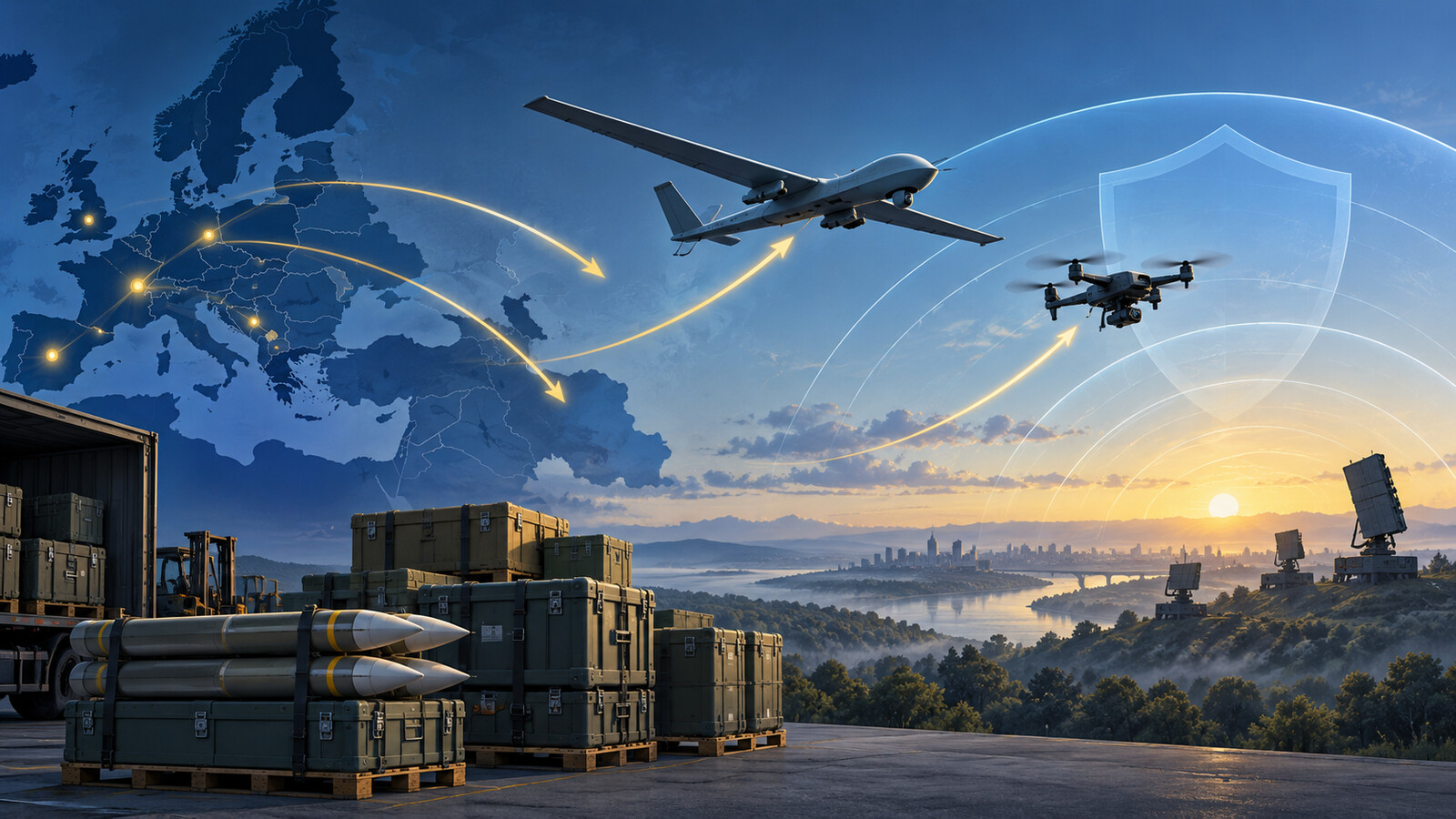
Reuters reported on September 18 that Ukraine had received a €3.3 billion tranche from the EU’s Ukraine Support Loan. Ukrainian Prime Minister Sergii Koretskyi said the funds would be allocated to priority defense needs, especially the procurement of missiles and drones.
The completed transfer followed European Commission President Ursula von der Leyen’s statement a day earlier that the EU would disburse the money on Friday. The Associated Press independently reported that Ukraine had received the tranche and that it was intended to strengthen defense capabilities, including purchases of missiles and drones.
Those reports establish three important points: the transfer occurred, the amount was €3.3 billion, and Ukrainian officials linked the money to missile and drone procurement. They do not establish a drone-only allocation or a signed order for any particular system.
Why the funding matters to the UAV sector
For drone manufacturers and operators, the practical importance is the scale and flexibility of the financing. Ukraine’s wartime demand spans several very different uncrewed-aircraft categories: short-range first-person-view aircraft, reconnaissance platforms, longer-range strike systems, interceptors, logistics aircraft, and supporting command, communications, navigation, and counter-UAS equipment.
However, none of those categories was named in the public confirmation of this tranche. It would therefore be premature to infer that the transfer favors one mission, airframe, manufacturer, or country of origin. “Drones” describes a procurement field, not a disclosed shopping list.
The financing also underscores a shift that matters beyond Ukraine: large defense packages increasingly treat uncrewed systems as recurring consumables and production capacity as a strategic requirement. That can affect component demand, factory investment, training pipelines, electronic-warfare resilience, and the speed at which designs move from field feedback into revised production runs.
The missing details are commercially important
The announcement leaves several questions unanswered.
- Allocation: Officials did not divide the €3.3 billion between missiles, drones, or other priority defense needs.
- Platforms: No aircraft models, performance requirements, payloads, quantities, or unit prices were identified.
- Suppliers: There is no public list showing how much, if any, will go to Ukrainian, European, or other manufacturers.
- Timing: Receipt of financing is not the same as delivery. Contracting, production, acceptance, training, and fielding can follow different schedules.
- Counter-UAS: The public statements do not say whether “drones” includes interceptor aircraft or other counter-drone equipment.
Those distinctions matter because a headline funding figure cannot be converted into a credible fleet estimate without knowing the mix. Thousands of small expendable aircraft and a much smaller number of complex long-range systems can consume similar budgets while creating very different production and operational effects.
What UAV readers should watch next
The next meaningful evidence will be procurement notices, manufacturer disclosures, production contracts, delivery announcements, or official budget documents that identify how the tranche is divided. Verified quantities and delivery milestones would reveal far more about industry impact than the headline amount alone.
Readers should also watch whether procurement emphasizes domestically produced Ukrainian systems, purchases through European partners, or a blend of both. Each route has different implications for supply chains, interoperability, intellectual property, maintenance, and the ability to replenish rapidly.
The financing sits alongside a wider effort to build layered defenses against missiles and drones. That context does not mean every funded UAV will be an interceptor. Counter-UAS systems combine detection, identification, command-and-control, electronic effects, and kinetic or uncrewed interceptors. Our earlier analysis of the VAMPIRE counter-drone selection explains why a named system or selection still requires careful separation between authorization, contracting, deployment, and demonstrated performance.
Bottom line
The €3.3 billion transfer is a confirmed financing event and a potentially substantial source of new drone demand. It is not yet a disclosed UAV contract. For the industry, the decisive developments will come when officials or suppliers identify specific procurements, production volumes, delivery dates, and measurable fielding results.
Disclosure: This article contains no affiliate links or paid placement.