
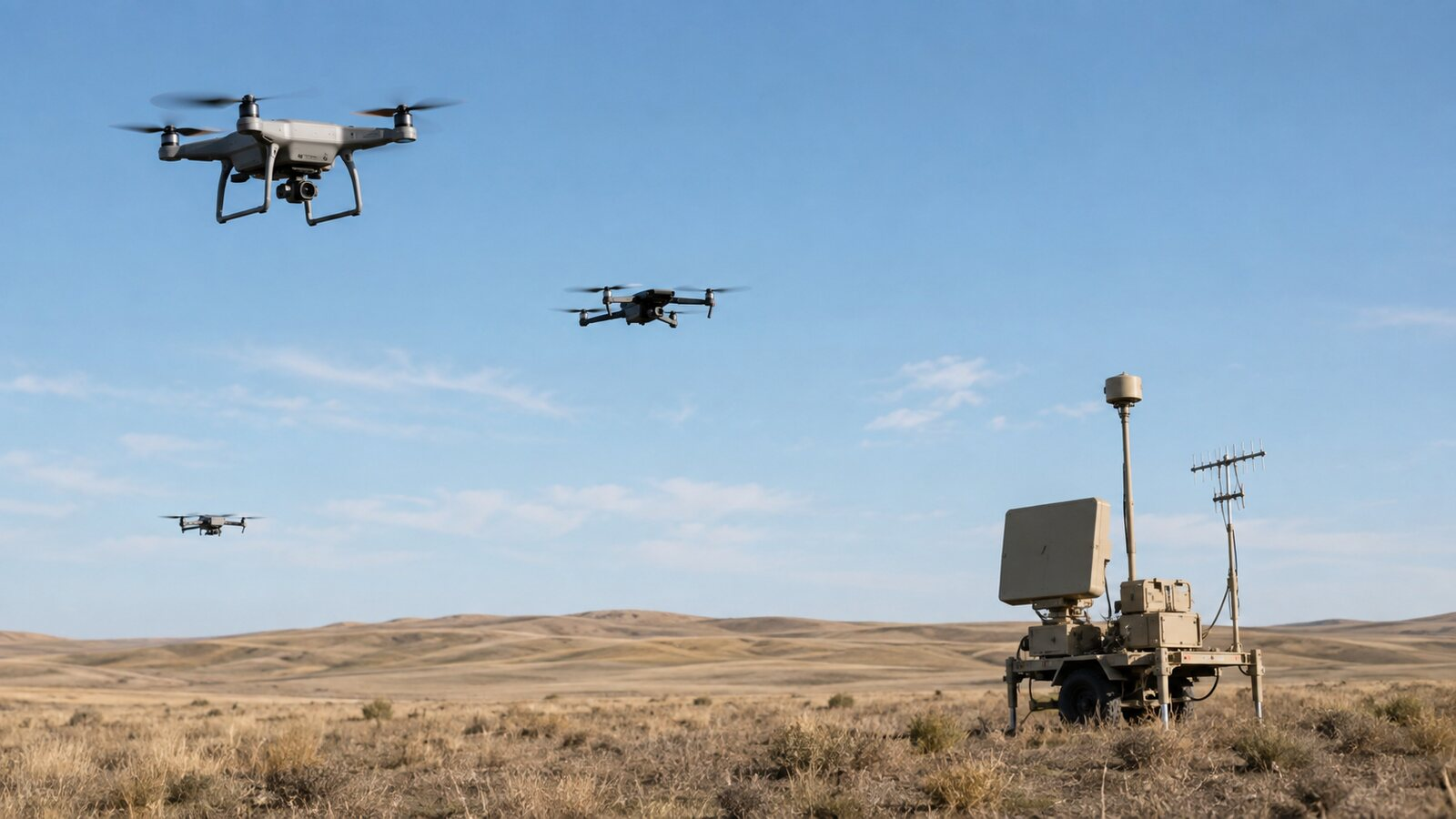
The U.S. Air Force is seeking six DJI drones for controlled counter-UAS training at F.E. Warren Air Force Base in Wyoming. Solicitation FA461326Q1042, posted August 14, requests real commercial aircraft so security personnel can train detection and mitigation systems against representative radio-frequency signatures. Quotes are due August 24; no contract award has been announced.
The purchase would support the 90th Missile Security Operations Squadron at a base that operates Minuteman III intercontinental ballistic missiles. The drones are proposed as training targets—not as operational surveillance aircraft.
What the Air Force Solicitation Requests
The official SAM.gov opportunity is a small-business request for quotes issued by the 90th Contracting Squadron. It lists:
- Two refurbished DJI Mavic 2 Pro Fly More packages
- Two DJI Mini 3 Pro aircraft with DJI RC controllers
- Two DJI Avata 2 Fly More packages
- Six payload-release devices
The notice anticipates a firm-fixed-price award using a lowest-price, technically acceptable evaluation. That distinction matters: the Air Force is soliciting bids, not reporting a completed purchase.
Why the Requirement Names DJI
According to the Air Force’s brand-name justification, DJI accounts for an estimated 80% to 85% of the global commercial-drone market. That percentage is the government document’s estimate, not an independently audited market-share figure.
The justification says DJI aircraft have proprietary electronic protocols, radio-frequency signatures, and flight characteristics that U.S.-made aircraft or simulations cannot reproduce closely enough for the squadron’s training objective. The operational argument is straightforward: counter-UAS personnel need exposure to the signals and behavior of commercially common aircraft they may encounter.
How the Air Force Describes the Cybersecurity Safeguard
The solicitation documents say each aircraft would receive U.S.-made RIZER software before use. The Air Force describes that configuration as an air-gapped environment intended to prevent telemetry or imagery from reaching foreign entities or Department of War networks.
That is a planned government safeguard, not an independent security test reviewed by All About UAVs. It reduces the risk described in the procurement documents but should not be read as proof that every possible cybersecurity concern has been eliminated.
A Narrow Exception for Foreign-Made Training Equipment
Stars and Stripes reports that the justification relies on the July 2025 Unleashing U.S. Military Drone Dominance memorandum. The memo permits minimum quantities of foreign-made drone equipment for activities such as electronic-warfare testing, training, and counter-UAS development under specified approval authority.
The exception does not erase the broader federal debate over DJI equipment. It illustrates a narrower tradeoff: agencies may restrict foreign-made drones for routine use while still needing representative aircraft for testing defenses against them. Our earlier coverage explains the related FCC questions affecting DJI equipment in the United States.
Why This Procurement Matters
The proposed purchase shows how counter-UAS training is moving beyond generic targets and computer models. The Department of War said in February that Joint Interagency Task Force 401 is expanding counter-drone instruction and technical integration for installations in the United States and abroad.
For defense and UAS professionals, the next meaningful checkpoint is the contract award after the August 24 deadline. Until then, the accurate description is that the Air Force seeks these aircraft; it has not yet completed the purchase.