
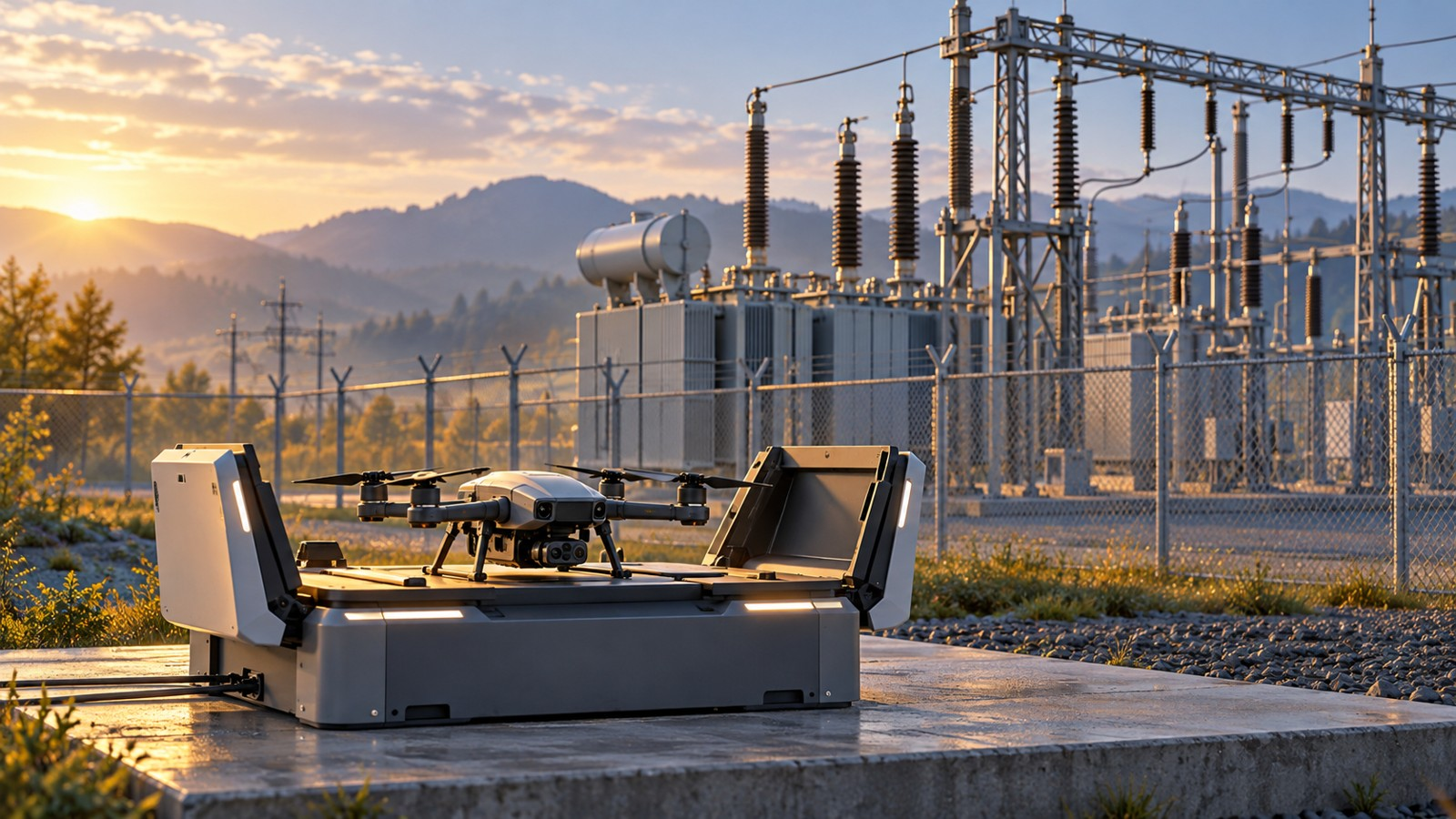
The takeaway: Skydio CEO Adam Bry says Richmond, Virginia-based utility Dominion Energy has added 100 docked drones and is moving experienced lineworkers and substation electricians into remote pilot roles. The October 16 report points to a practical shift: collecting inspection evidence before dispatching crews. But the fleet count and claimed time savings are participant statements, not independently audited performance results. For utility operators, the question is whether earlier imagery produces better maintenance decisions—not simply whether a drone can launch remotely.
What is new in Dominion’s docked-drone program
In a public post carrying Dominion’s program video, Bry states that the utility added 100 docked drones. The accompanying transcript describes centralized remote inspection, using imagery to organize equipment and crews before field deployment, and opportunities for lineworkers and electricians to become remote pilots.
DroneXL reported the announcement on October 16. Its coverage identifies the aircraft shown as Skydio X10s, but says the announcement did not disclose the dock model, site locations or per-site allocation. We therefore do not equate 100 aircraft with 100 operational sites, or describe the announcement as a newly awarded contract.
This is a scale-up story, not the first appearance of docked inspections at Dominion. The FAA’s BEYOND program record documents a February 2, 2023 approval for full-remote, fixed-site drone-in-a-box inspections at generation facilities in six states, plus separate August 29, 2024 approvals involving solar and substation inspections. Those historical approvals establish program context; they do not identify the permissions covering every aircraft in the new announcement.
What the reported time savings actually mean
Bry’s post and the Dominion video describe roughly eight to twelve hours saved per event by obtaining situational awareness before crews arrive. That is an operational claim about coordination and response preparation. It is not a published fleet-wide average reduction in customer outage duration, and the available material does not provide the sample size, event mix or comparison method needed to calculate one.
The distinction matters because several clocks run during an equipment event: detection, assessment, dispatch, travel, isolation, repair and restoration. Earlier imagery might shorten one stage without changing the others. For example, knowing which replacement assembly to send could prevent a second trip, while access restrictions or spare-part availability still determine the repair schedule. That is an illustrative planning example, not a documented Dominion incident.
Buyers should request results tied to a defined decision: time to actionable assessment, avoidable truck rolls, repeat inspections, correctly prioritized defects and total operating cost. A credible comparison should include unsuccessful missions and periods when weather, communications or maintenance prevented launch. Counting only successful flights would overstate availability.
Why the staffing change deserves attention
The strongest operational idea is pairing flight capability with equipment knowledge. A qualified pilot can collect clear imagery without necessarily recognizing the defect an experienced electrician would investigate. Conversely, a subject-matter expert still needs the training and procedures appropriate to the aircraft and mission. The two skill sets complement each other.
For a utility building a similar program, define who approves a mission, who reviews the imagery and who converts a finding into a work order. A clear picture is only an intermediate deliverable. Its value arrives when the right person can identify the asset, understand the observation, assess urgency and route the evidence into maintenance planning.
Do not interpret the workforce announcement as proof that climbing, close inspection or field crews are being eliminated. Remote imagery may help target those activities more effectively. The useful comparison is the complete inspection workflow, including tasks that still require someone on site, rather than a simple pilot-versus-lineworker substitution.
A dock is infrastructure, not just an aircraft accessory
Our drone-in-a-box buying guide explains the broader operating model. A permanent installation brings questions about power, connectivity, physical access, maintenance, cybersecurity, weather limits, local recovery and data retention. Those dependencies deserve the same attention as flight endurance and camera performance.
This announcement does not establish unattended operation, unrestricted beyond-visual-line-of-sight flight, continuous availability or simultaneous supervision of multiple aircraft by one pilot. Nor does an earlier Dominion waiver demonstrate that another operator can copy its conditions. Teams should verify the authority and operating procedures for their own proposed missions before including remote coverage in a service commitment.
What to watch next
The next useful disclosures would be the deployment schedule, commissioned site count, mission availability, maintenance burden and measured inspection outcomes. A breakdown of what “added” means—ordered, delivered, installed or routinely operational—would also help readers understand the scale of the rollout.
For operators evaluating a similar investment, start with one repeatable inspection decision and a documented baseline. Define success before deployment, retain failed-mission records, and compare the full cost of collecting and reviewing evidence with the previous process. Dominion’s reported expansion is a meaningful adoption signal; a reproducible business case requires the operating data behind it.
Sources
- Adam Bry (Skydio CEO): public post and Dominion program video — Oct. 16, 2026
- DroneXL: “Skydio: Dominion Adds 100 Docked Drones and Turns Linemen Into Pilots” — Oct. 16, 2026, independent reporting
- FAA BEYOND Program record — historical BVLOS waiver context for Dominion Energy drone-in-a-box inspections
- All About UAVs: “Drone in a Box: What Buyers Need to Know Before Automating Inspections” — Sept. 10, 2026, related prior coverage
Reviewed October 18, 2026. All About UAVs did not independently test the system or audit the claimed time savings. Featured image: AI-generated conceptual illustration, not Dominion equipment or a deployment photograph. No affiliate links, sponsorship or paid placement. Corrections: help@allaboutuavs.com.
Leave a Reply