The takeaway: Beijing’s November 15 ban on possessing or storing drones is now producing visible compliance. Owners are lining up at approved buyback sites, recycling aircraft or moving them outside the city, according to fresh reporting from ABC News. Some sellers are receiving less than one-quarter of their purchase price. This is a material update to the rule announced in September: the policy has moved from a future prohibition to an active disposal and relocation process, although public data still does not show how many aircraft have been surrendered.
What changed since the September announcement
All About UAVs reported on September 14 that Beijing would prohibit possession and storage of drones and key components beginning November 15. At that point, the practical questions concerned buyback terms, covered components, exceptions and enforcement.
ABC News reported on October 12 that many owners are now lining up at government-approved buyback sites. Others are sending aircraft to relatives outside Beijing or relocating them to nearby cities. That documented behavior is the new development: owners are acting before the deadline rather than waiting for enforcement.
The available reporting does not provide a citywide surrender count, the number of approved sites or the program’s total cost. It would therefore be premature to claim that Beijing has removed most privately held drones or that the buyback is complete.
The economics are becoming clearer
ABC found that some owners were offered less than one-quarter of what they paid. One family instead shipped a year-old drone purchased for about $2,000 to Sydney. A Beijing aerial photographer moved his aircraft to his parents’ home in Tianjin so he could continue using it outside the capital.
Those examples should not be treated as a universal valuation formula. Payments can vary with model, condition, registration status and the approved channel. They do show why relocation may be more attractive than a discounted sale for owners who have a lawful place to store and fly the equipment elsewhere.
The compliance burden is broader than lost resale value. Commercial operators may also face shipping, insurance, storage, inventory-control and staff-travel costs. A business that serves projects outside Beijing could retain useful aircraft only by keeping them beyond the municipal boundary and confirming that every trip, repair and temporary storage arrangement complies with local rules.
Scope: more than camera quadcopters
ABC reports that the regulation applies to “unmanned aerial vehicles” and appears to reach radio-controlled model aircraft, toy drones and powered flapping-wing toys. Online marketplaces have restricted sales of motorized flying products to Beijing delivery addresses.
That broad description matters, but operators should not infer a definitive product-by-product legal list from English-language reporting. The September rule also referred to key components, while accessible coverage still does not resolve every question about controllers, propulsion systems, payloads, spare parts, repair inventory or equipment in transit.
Visitors face a simpler practical rule: do not bring a drone into Beijing. An aircraft does not have to be flown to create a possession problem after November 15.
Enforcement and penalties
ABC says noncompliant owners can face confiscation and fines of up to 5,000 yuan. The report also says the city encouraged owners to move aircraft out of Beijing or use approved buyback and recycling programs before the deadline.
The verified distinction remains important: Beijing is regulating possession within the municipality, not banning drone ownership across China. Registered operations continue elsewhere under national and local requirements. Beijing’s approach is unusually restrictive because the capital combines dense urban airspace with heightened security controls.
What the update means for the drone sector
China continues to promote a low-altitude economy built around manufacturing, delivery, agriculture, tourism and emergency response. ABC cited Civil Aviation Administration of China figures showing nearly 3.3 million registered civilian drones at the end of 2025, up 51 percent from 2024. Beijing’s rule does not reverse that national strategy; it demonstrates that commercial development and local security restrictions can move in opposite directions.
For manufacturers and dealers, the immediate effects are geographic. Delivery-address blocks remove the capital from ordinary retail channels. Buybacks may increase secondhand inventory elsewhere, while service providers must determine whether repairs, demonstrations or temporary storage remain possible inside the city. The public record reviewed for this article does not quantify sales losses or identify a nationwide market effect.
What owners should do before November 15
- Choose a lawful disposition route. Use an approved buyback or recycling location, or move the equipment outside Beijing before the deadline.
- Document the transfer. Keep receipts, shipping records and serial-number evidence showing when and where the aircraft left your custody or the city.
- Check the full equipment list. Do not assume that removing the airframe alone resolves rules covering key components.
- Plan travel carefully. Do not route a packed drone through Beijing merely because it will remain unused.
- Verify local rules at the destination. Moving equipment out of Beijing does not authorize flight elsewhere.
What to watch next
The next useful evidence will be official counts of surrendered or relocated aircraft, final buyback spending, enforcement guidance and any published exceptions for research, public safety, repair businesses or other institutions. After November 15, confiscations, fines or formal compliance statistics would show how aggressively the city is applying the rule.
For now, the status is clear but limited: Beijing owners are actively disposing of or moving drones, and some are absorbing substantial losses. The ban is not yet in force, no citywide compliance total is available, and the policy should not be generalized to the rest of China.
Sources and disclosure
- ABC News: “Beijing residents dispose of drones ahead of ban on ownership” (October 12, 2026)
- All About UAVs: original September 14 coverage of the November 15 possession ban
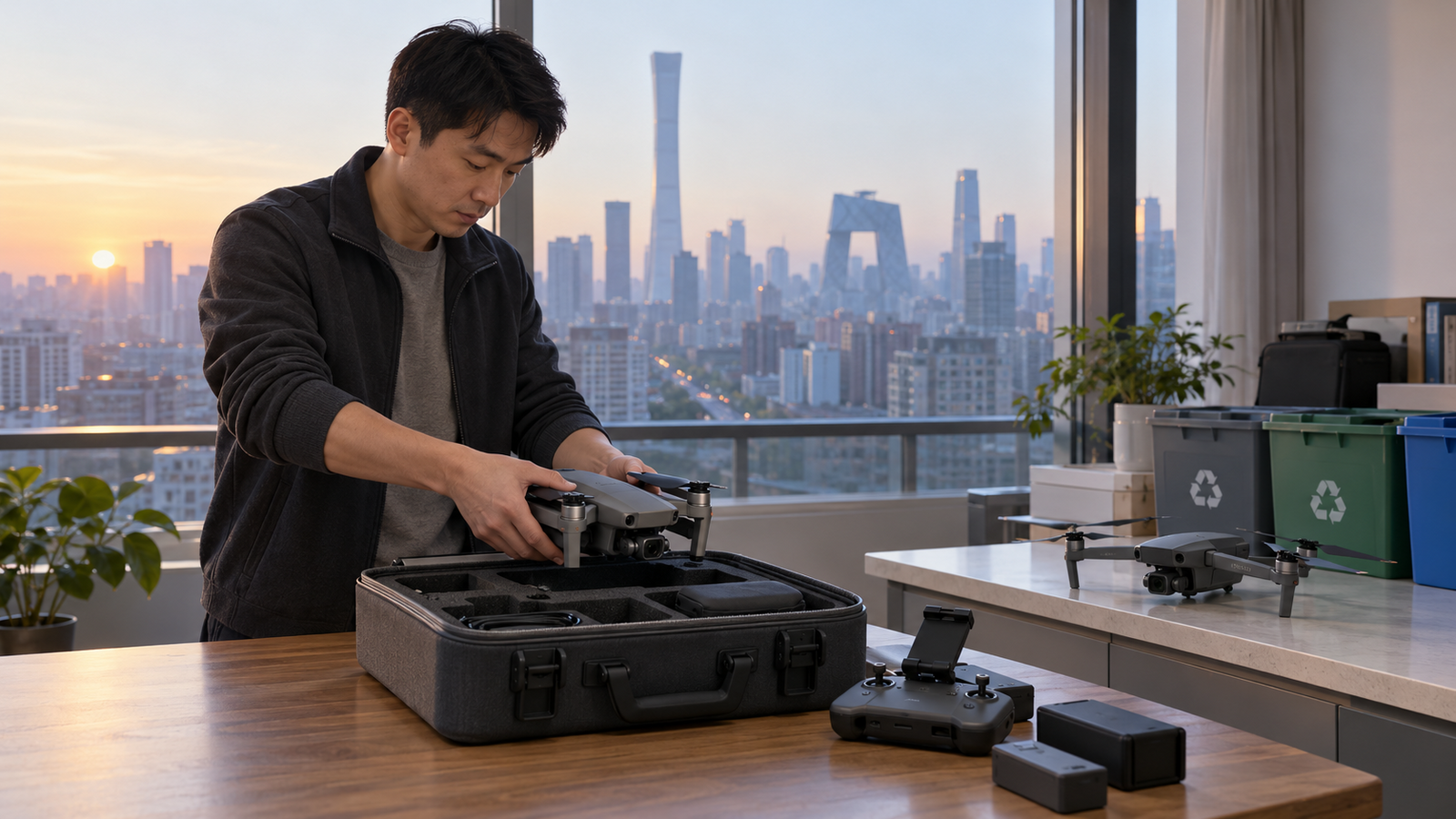
Featured image: AI-generated conceptual editorial illustration for All About UAVs. It does not depict an actual owner, official buyback site, government action or identifiable drone model. No affiliate links, sponsorship or paid placement are included.
Leave a Reply