
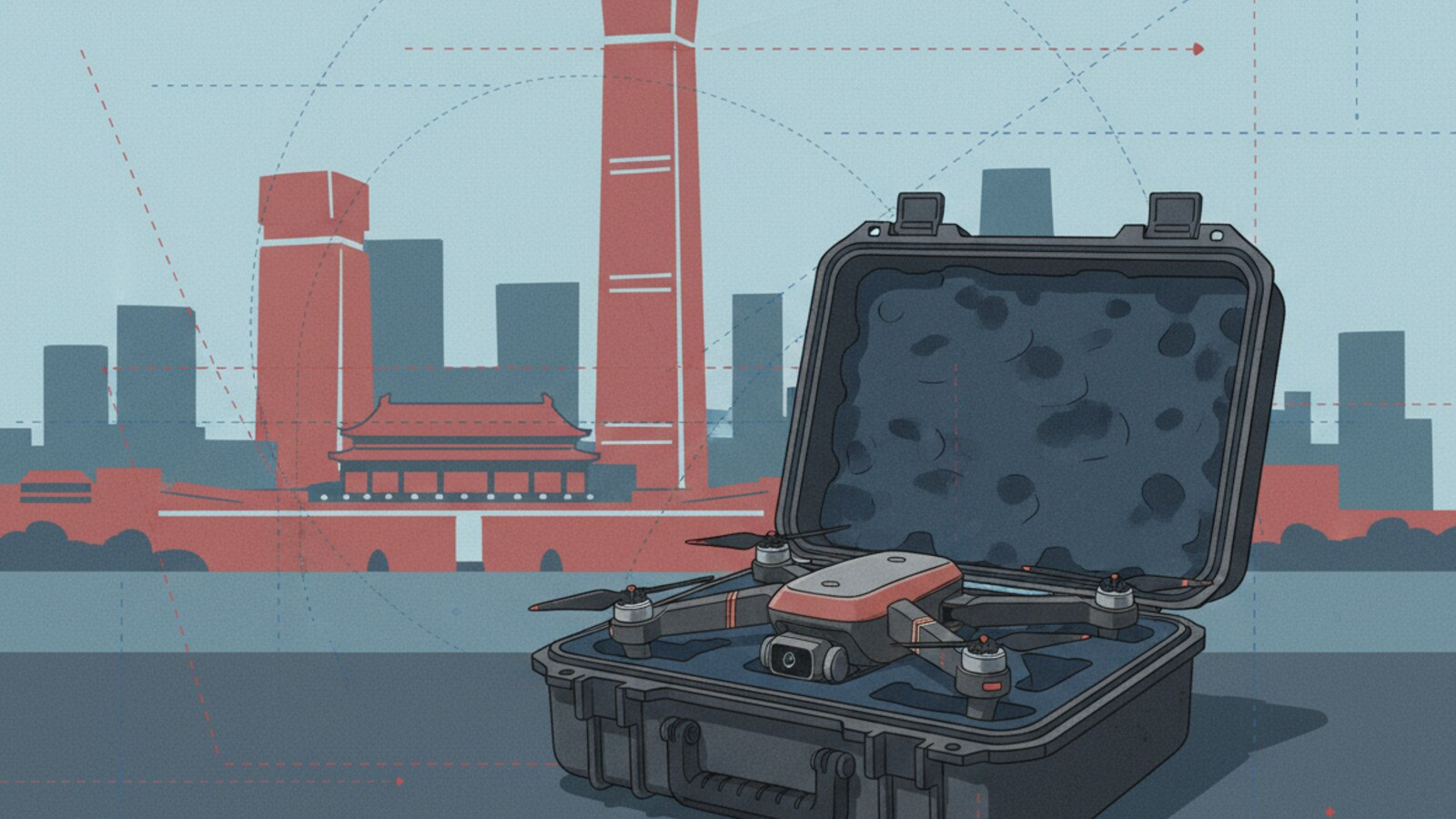
Beijing will prohibit residents and businesses from possessing or storing drones and key components inside the city beginning November 15, 2026. The revised policy goes substantially beyond restricting flights: owners must sell, recycle or move affected equipment out of Beijing. The immediate lesson for travelers and operators is simple—registration alone will no longer make keeping a drone in the capital lawful.
What Beijing’s drone possession ban changes
The Associated Press reported on September 13 that Beijing authorities released revised regulations banning the possession or storage of drones and key components within the municipality from November 15. The rules apply to individuals and companies, and authorities may confiscate equipment and impose fines for noncompliance.
This is a meaningful escalation from the framework introduced earlier in 2026. Beijing had already barred unauthorized flights and drone sales, designated its administrative area as restricted airspace and required existing owners to register aircraft under their real identities. Under the revised approach, registration is no longer a pathway to retaining a drone in the city.
The Financial Times separately reported that Beijing is creating a buyback program and that owners must surrender or remove drones by November 15. It reported subsidies of up to 3,000 yuan, while the exact payment depends on the qualifying equipment and program terms.
What owners are expected to do before November 15
Public reporting describes three main options for existing owners: sell equipment through designated buyback locations, scrap and recycle it through the approved process, or transport it outside Beijing before the deadline. Visitors are also prohibited from bringing drones into the city.
Owners should not assume that separating a drone into pieces avoids the rule. The policy reportedly includes key components as well as complete aircraft. Because publicly accessible English reporting does not provide an exhaustive component list, anyone affected should obtain the original local notice and instructions from Beijing authorities before moving, selling or disposing of equipment.
The policy is geographically specific. AP notes that drone operations remain possible elsewhere in China subject to national real-name registration and applicable local airspace restrictions. Beijing’s rules should therefore not be described as a nationwide ban on drone ownership.
Why Beijing moved from flight controls to possession controls
Beijing has long treated the airspace over the capital more restrictively than many other Chinese cities. The revised rules follow a fatal June incident in which a small aircraft struck a skyscraper, killing its pilot and injuring 13 people, according to AP. The aircraft involved should not be casually described as a consumer quadcopter; available reporting calls it a small aircraft, and the precise classification matters.
A possession ban changes the enforcement problem. Flight restrictions require authorities to detect an aircraft, locate its operator and establish that the operation violated the rules. Prohibiting storage and possession allows enforcement before takeoff and limits the number of aircraft available inside the restricted area.
That approach also imposes broader costs. Universities, media organizations, surveyors, service companies and equipment owners may need to relocate assets or seek clarity about any institutional exceptions. AP previously reported that Beijing’s May framework permitted limited uses by universities, research organizations and public-safety entities with police approval. The new reporting does not fully explain how those exceptions will operate after November 15.
What the policy means for DJI and the drone market
China remains central to global consumer and commercial drone manufacturing, with DJI as its best-known producer. Beijing’s policy is therefore notable even though it applies to one municipality. It shows that a government can promote a national low-altitude economy while imposing far stricter controls in politically sensitive and densely populated airspace.
The direct market effect will depend on enforcement, exceptions and the number of registered aircraft inside Beijing. Neither AP nor the Financial Times supplied a complete inventory of affected drones, projected buyback cost or estimate of removed equipment. Claims about national sales, DJI revenue or broader Chinese demand would be speculative without those figures.
For U.S. readers, this development is separate from American supply-chain restrictions, tariffs and FCC proceedings. Our earlier analysis of DJI’s position in the U.S. market addresses those domestic questions. Beijing’s action concerns local possession and airspace security, not U.S. equipment authorization.
Four practical takeaways for UAV operators
- Do not travel into Beijing with a drone. A packed but unused aircraft may still violate possession restrictions.
- Registered owners need a disposition plan. Real-name registration does not replace the November 15 removal deadline.
- Verify what counts as a key component. Controllers, propulsion parts, payloads or other equipment may be treated differently under implementation guidance.
- Do not generalize Beijing’s rule to all of China. National registration and local airspace requirements continue to vary outside the capital.
What remains unclear
The next important details are the final list of covered components, procedures for businesses with equipment in transit, treatment of research and public-safety exemptions, buyback valuation, penalties and enforcement checkpoints. Operators also need authoritative guidance on whether temporary storage by logistics providers or repair facilities is prohibited.
Until those implementation details are published in accessible form, the verified conclusion should remain narrow: beginning November 15, Beijing plans to prohibit possession and storage of drones and key components within city limits, with buyback, recycling or removal offered as compliance routes. It is one of the clearest examples yet of a major city moving from regulating drone operations to removing privately held aircraft from the jurisdiction.
Disclosure: This article contains no affiliate links or paid placement. The featured image is an original AI-generated editorial illustration and does not depict an enforcement action, official buyback site or specific manufacturer’s aircraft.