Practical takeaway: The Autel Alpha is a specialized enterprise aircraft for teams that value long-range visual and thermal inspection, rugged construction, and redundant batteries more than portability or a low purchase price. Its DG-L35T payload is unusually versatile, but buyers should treat endurance, transmission range, obstacle sensing, and extreme zoom as manufacturer maximums—not guaranteed field performance. At roughly $19,000 for current U.S. bundles (as of October 2026), it deserves a payload-specific demonstration and a complete support quote before purchase.
What the Autel Alpha is built to do
The Alpha sits above Autel’s compact enterprise aircraft. It is aimed at utilities, public-safety agencies, search-and-rescue teams, and industrial inspection programs that need visible, thermal, and ranging data from one aircraft. It is a poor fit for casual pilots and smaller businesses that mainly need mapping photos or routine roof imagery.
The aircraft’s appeal is not simply “more zoom.” The combination of a 48-megapixel wide camera, an 8-megapixel 35× optical zoom camera, two 640×512 thermal cameras, and a laser rangefinder can reduce payload changes during complex inspections. Autel’s current product specifications list a 10-to-2,000-meter rangefinder and 13 mm and 45 mm thermal focal lengths. Those are manufacturer specifications; All About UAVs has not independently flight-tested this system.
Key specifications—and the limits behind them
- Ready-to-fly weight: 6,480 g with batteries, propellers, and DG-L35T gimbal
- Maximum takeoff mass: 8,400 g
- Maximum flight time: 40 minutes in windless manufacturer testing at 10.5 m/s; maximum hover time is 38 minutes
- Maximum speed: 25 m/s in Ludicrous mode under stated test conditions
- Wind resistance: 10.7 m/s during takeoff and landing; 12 m/s in cruise
- Environmental rating: IP55; stated operating temperature of −20°C to 50°C
- Video link: up to 15 km in FCC regions without interference or blockage
- DG-L35T: 48 MP wide camera, 4K 35× optical zoom, 560× maximum hybrid zoom, dual 640×512 thermal cameras, and laser rangefinder
These numbers should not be combined into an imagined “best case” mission. Forty minutes is not a planning endurance, 15 km is not a legal operating radius, and 560× hybrid zoom includes substantial digital magnification. Image usefulness at extreme zoom will depend on atmosphere, vibration, focus, lighting, target contrast, and operator technique.
Where the sensor package makes sense
Utilities and industrial inspection
The long optical zoom and narrow thermal lens may help crews inspect insulators, connectors, substations, flare structures, and other assets from greater standoff distance. The wide thermal channel provides context while the telephoto channel examines a smaller target. The laser rangefinder can add target coordinates. Buyers should still confirm radiometric accuracy, measurement limits, compatible analysis software, and reporting workflow before treating the package as a thermography solution.
Public safety and search operations
The mix of wide, zoom, thermal, and ranging sensors can support overwatch, missing-person searches, and fire-scene awareness. It does not make the aircraft intrinsically quiet, guarantee identification at a particular distance, or permit flight into unsafe heat, smoke, precipitation, or restricted airspace. Departments also need policies for evidence retention, cybersecurity, privacy, and operator training.
Obstacle sensing and communications require careful reading
Autel describes multi-direction visual sensing and millimeter-wave radar capable of detecting small obstacles, including powerlines, under appropriate conditions. That is not a collision guarantee. The official specification also notes an important regional/configuration distinction: on the 24 GHz aircraft version, most 60 GHz radar functions are disabled, leaving only the downward 24 GHz radar for landing assistance; that version does not provide millimeter-wave obstacle avoidance at night. Buyers should get the exact regional hardware and enabled functions in writing.
Similarly, the advertised 15 km Skylink 3.0 range is measured without interference or blockage. Frequency availability varies by jurisdiction. A-Mesh relay and frequency-hopping features may be valuable around terrain or infrastructure, but they do not replace an RF survey, operating procedures, or compliance with local spectrum and aviation rules.
Price, availability, and ownership costs
As of October 2026, U.S. dealer listings show the Alpha with DG-L35T at $19,289, but inventory is thin: at least one dealer lists the bundle as out of stock and another reports a single unit remaining. That makes $19,289 a useful market reference, not an official universal base price, and buyers should confirm lead times before planning a deployment. Confirm exactly what the quote includes: aircraft, gimbal, controller, battery pairs, charger, case, RTK services, software, training, warranty, and support.
Ownership costs extend beyond the airframe. Enterprise teams should budget for spare paired batteries, charging capacity, props, cases, firmware management, thermal training, calibration or verification procedures, insurance, repairs, downtime coverage, software, and pilot proficiency. Hot-swappable batteries can keep the aircraft powered during a battery exchange, but that feature should not be confused with unlimited continuous flight or a substitute for battery inspection.
Compatibility and procurement questions
Autel advertises multiple mounting interfaces and an open PSDK for third-party development. That does not mean every accessory is plug-and-play. Obtain written confirmation of payload weight, balance, power, data, firmware, warranty, and flight-test requirements. U.S. public agencies should also conduct their own procurement and cybersecurity review; feature capability is separate from federal, state, or grant eligibility.
Federal communications rules add another layer of risk. In December 2025 the FCC added foreign-produced drones and critical UAS components to its Covered List, which blocks new equipment authorizations for foreign-made models. Previously authorized aircraft such as the Alpha can generally still be sold and operated, but future variants may not reach the U.S. market. Separately, the FCC’s pending PS Docket 26-189 proposal would prohibit importing and marketing certain foreign-produced “military-grade” drones—a category that, as proposed, includes thermal-equipped aircraft. As of October 11, 2026, no final rule had been adopted, but buyers should ask dealers about spare-parts inventory, battery supply, and firmware support if that proposal is finalized.
Because the aircraft weighs far less than 55 pounds, it can fit within the basic weight boundary of Part 107, but the mission still controls the authorization required. The FAA requires registration and Remote ID compliance where applicable, and routine Part 107 operations generally require visual line of sight unless the operator has appropriate authority. A 15 km radio specification does not authorize a 15 km flight.
Credible alternatives
The DJI Matrice 350 RTK offers a broad payload and service ecosystem, while compact platforms such as the DJI Matrice 30T, Skydio X10, and Autel EVO Max 4T prioritize different combinations of portability, autonomy, thermal capability, and procurement fit. Our earlier Autel EVO Max 4T analysis is a useful comparison for teams that can accept less thermal standoff in exchange for a smaller system. Comparisons should be built around the actual mission, required sensor output, support network, and total system price—not maximum zoom numbers alone.
Who should buy it—and who should skip it
Shortlist the Autel Alpha if your program repeatedly needs long-range visible and thermal observation, can use both thermal focal lengths, and has the budget and procedures to support a 14.3-pound operational aircraft. Require a demonstration using your targets, distances, weather, software, and reporting workflow.
Skip it if portability, low acquisition cost, easy one-person deployment, survey-grade mapping, or a specific government procurement status is the main requirement. A lighter platform or a purpose-built mapping system may deliver better value.
Conclusion
The Autel Alpha’s strongest case is sensor consolidation: wide visual context, serious optical reach, two thermal perspectives, and ranging on a rugged dual-battery platform. Its weakest case is any purchase justified by headline maximums alone. The prudent decision is a mission-specific trial, written confirmation of the regional radar configuration, a complete bill of materials, and a support plan. For the right utility or public-safety team, it could be a capable inspection tool; for everyone else, it is more aircraft—and more ownership cost—than necessary.
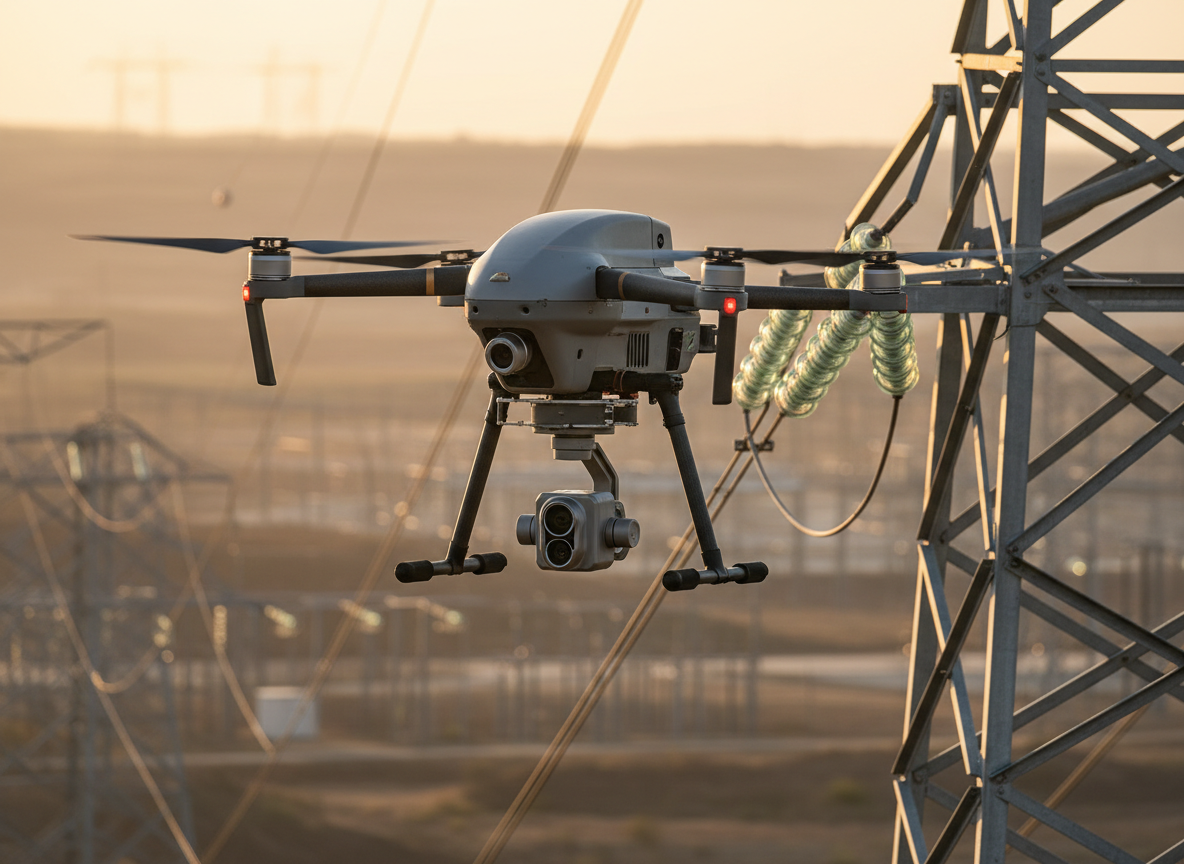
Disclosure: All About UAVs independently prepared this editorial buying guide and did not perform firsthand testing. No affiliate links or material relationship are included. The featured image is an original AI-generated editorial illustration, not a photograph of the Autel Alpha. Product specifications and claims are attributed to their sources and may vary by region, configuration, and firmware.
Leave a Reply