Two fresh developments show the security challenge facing expanded drone operations. TSA has formally opened applications for closed technical roundtables that will help shape model security programs for future routine BVLOS flights. Separately, suspected unauthorized drones forced Amritsar International Airport to stop operations for about 90 minutes and divert seven flights. The practical takeaway is clear: scalable UAV operations depend on credible security procedures and disciplined separation from crewed aviation.
TSA begins building the security playbook for routine BVLOS
On September 4, the Transportation Security Administration published a Federal Register notice seeking representatives for technical roundtables on the security of unmanned aircraft systems operating beyond visual line of sight. Applications are due October 19, 2026.
The meetings are intended to inform model language for TSA-approved security programs. TSA says it wants to hear what organizational, technological, structural and physical safeguards operators already use under FAA waivers or exemptions. The agency believes some existing practices may satisfy portions of future security requirements.
This is not a new operating authorization, a final Part 108 rule or an open public workshop. The roundtables will occur after the FAA and TSA publish their final rules, participation will be limited, and the meetings will be closed to protect Sensitive Security Information. Participants must represent an affected BVLOS operator or association, receive TSA approval for SSI access and sign a nondisclosure agreement. TSA generally limits each company or association to two representatives.
What BVLOS operators should prepare now
The notice provides a useful preview of the security evidence serious BVLOS applicants may need. The 2025 joint FAA-TSA proposal paired expanded flight authority with two broad TSA elements: vetting certain covered personnel and requiring certain operators to maintain an approved security program.
- Personnel: document access controls, role assignments, training, vetting and procedures for removing access.
- Aircraft and control systems: identify who can command the aircraft, change routes, update software or retrieve sensitive data.
- Communications: record how command-and-control links, credentials and operational networks are protected and monitored.
- Facilities and equipment: define physical security for aircraft, docks, batteries, payloads and control stations.
- Incident response: maintain procedures for lost links, unauthorized access, suspicious activity and coordination with public authorities.
Those are prudent preparation areas, not a claim that TSA has finalized a universal checklist. Operators should preserve records of what they already do, where controls are inconsistent and how responsibility is assigned. Our earlier BVLOS and drone-security roundup explains why operational scale and security obligations are advancing together.
Suspected drones close Amritsar airport for 90 minutes
The consequences of weak separation were visible Sunday night in India. According to reporting by The Indian Express and The Financial Express, authorities detected multiple drone-like objects near the operational area of Sri Guru Ram Das Ji International Airport. Flight operations stopped at about 9:50 p.m. and resumed at 11:15 p.m. after no further activity was observed.
Seven arriving flights were diverted—five to Delhi and two to Chandigarh. Airport officials said a Joint Action Committee assessed the reports after air traffic control received information from the Indian Air Force. Five diverted aircraft later returned, one Air India flight was canceled, and a Malaysia Airlines flight was expected later.
Initial reporting described a potentially serious incursion near an airport close to the Pakistan border. The later police account was less dramatic but still consequential: investigators said a drone had been used without permission to film a nearby sports tournament. That explanation is attributed to local police; it does not erase the operational impact or prove that every initial sighting was the same aircraft.
Why an ordinary camera flight can create an aviation emergency
An airport cannot wait for investigators to establish a drone operator’s intent while passenger aircraft are approaching a runway. A small camera drone, a mistaken sighting and a hostile aircraft can initially produce the same operational problem: an uncertain object in protected airspace with little time to determine its path.
That asymmetry explains why even an apparently recreational flight can trigger holding patterns, diversions and cancellations. The operator may see a harmless video job; controllers must account for collision risk, distraction during critical phases of flight and the possibility of additional aircraft. The incident also shows why counter-UAS policy is difficult: detection must be reliable, identification must be fast, and any response must avoid creating a second hazard for crewed aviation.
The connection between the two developments
TSA’s roundtables concern authorized BVLOS networks, while the Amritsar disruption involved suspected unauthorized activity. They are not the same problem. But both depend on knowing who controls an aircraft, whether its operation is legitimate, how authorities receive useful information and what happens when the expected safeguards fail.
- For commercial operators: treat security documentation as part of the operating system, not paperwork added after a waiver or contract.
- For recreational and media pilots: verify airport restrictions and local requirements before launch; a short filming job can disrupt scheduled aviation.
- For airports and public agencies: practice the handoff from detection to assessment, law enforcement and flight-operations decisions.
- For buyers: evaluate identity, access control, logging and update management alongside endurance, payload and range.
What happens next
Qualified U.S. operators and associations have until October 19 to seek a place in the TSA roundtables. The meetings themselves will wait until the final FAA and TSA BVLOS rules are published, so the notice should be read as preparation for implementation—not proof that routine Part 108 operations are already available.
In Amritsar, local police said legal action would follow the unauthorized sports-event filming. The more important industry lesson is immediate: public confidence in expanded drone operations will be shaped not only by successful missions, but also by how well the sector prevents ordinary flights from becoming airspace incidents.
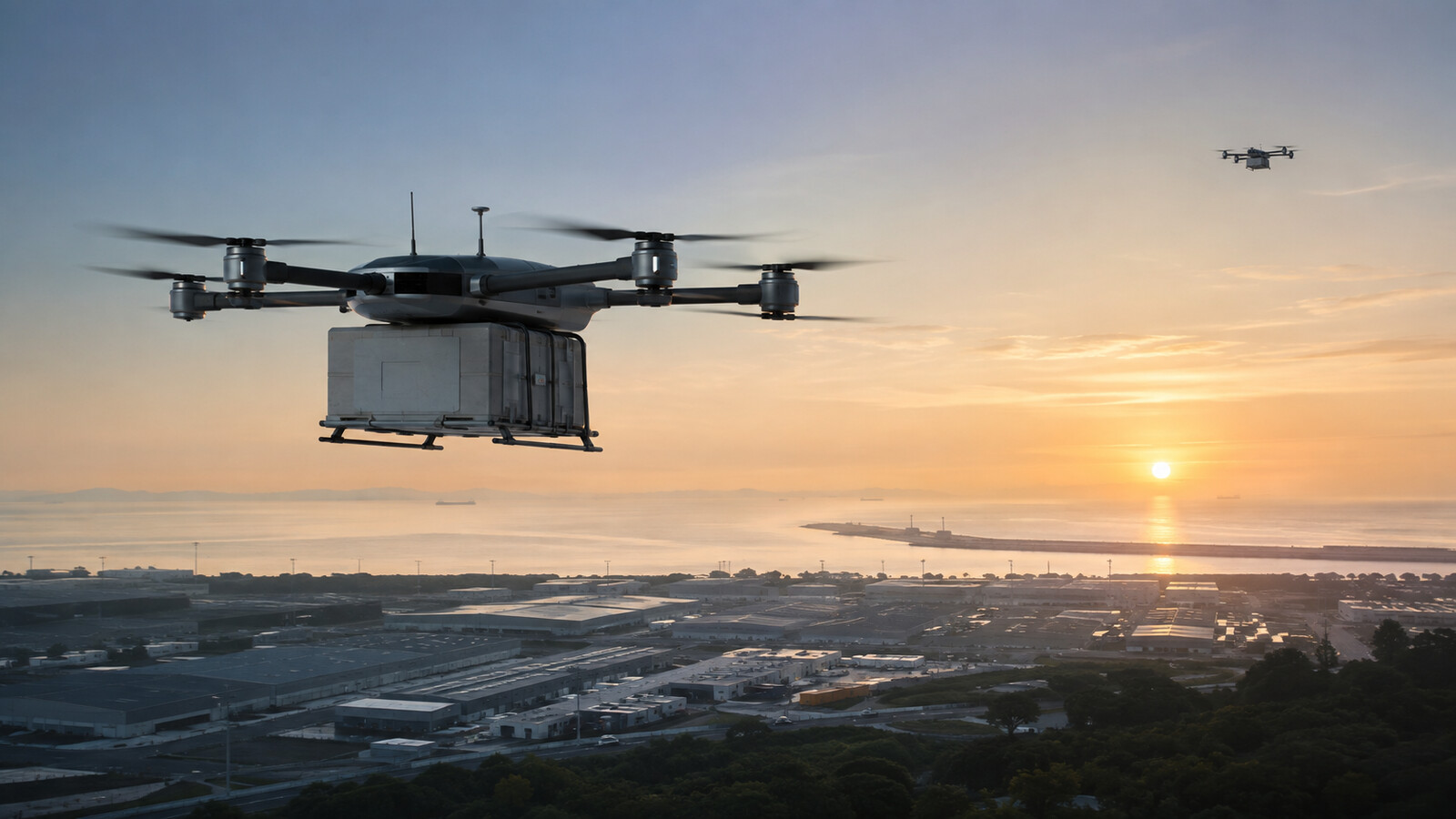
Disclosure: This article contains no affiliate links or paid placements. The featured image is an original editorial illustration and does not depict the Amritsar incident or a specific TSA roundtable.