
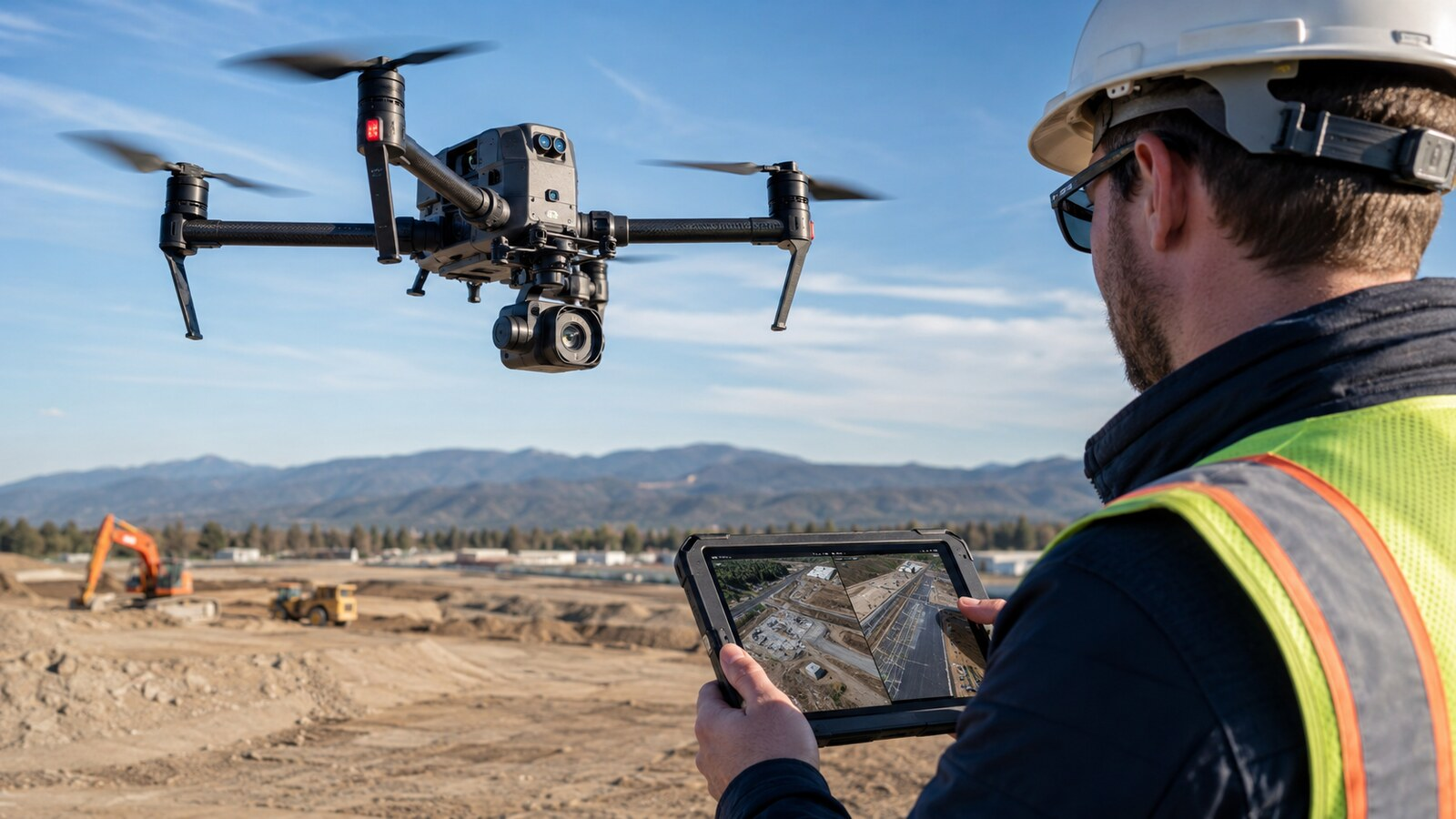
A drone can produce sharp, attractive photographs and still be the wrong tool for accurate mapping. One reason is the shutter: the camera may record the frame all at once, or scan it line by line while the aircraft is moving.
That difference can affect straight lines, tie points, flight speed and ultimately the reliability of an orthomosaic or 3D model. Here are seven things commercial drone buyers should understand before paying more for a mechanical shutter—or assuming an electronic shutter is good enough.
1. An electronic shutter may not capture the whole frame at once
Many drone cameras use a rolling electronic shutter. The sensor reads rows of pixels in sequence, so the bottom of the image is recorded slightly later than the top. If the aircraft or subject moves during that readout, objects can lean, stretch or appear skewed. Sony’s explanation of rolling and global shutter behavior shows why sensor readout—not just exposure time—matters.
A mechanical shutter exposes the sensor more uniformly and reduces this source of geometric distortion. That is especially valuable when the images will be measured rather than simply viewed.
2. A fast shutter speed does not eliminate rolling-shutter distortion
Shutter speed controls how long each portion of the sensor gathers light. It does not necessarily control how long the sensor takes to read the entire frame. A photo captured at 1/1000 second can freeze motion within each row while different rows are still recorded at different moments.
That is why specifications must be read carefully. DJI lists both electronic and mechanical shutter ranges for the Mavic 3 Enterprise; the faster maximum electronic setting does not automatically make it the better mapping mode.
3. Flight speed turns a small camera effect into a production issue
The faster the drone moves, the farther the camera travels during sensor readout. Slowing down can reduce distortion, but it also reduces daily coverage and may require more batteries, labor and site access.
- Small sites may tolerate a slower mission with an electronic shutter.
- Large acreage makes every reduction in speed expensive.
- Wind, low light and short capture intervals can increase the risk of blur or inconsistent overlap.
Purpose-built mapping aircraft combine the shutter with short capture intervals and faster mission speeds. DJI, for example, markets the Matrice 4E around a mechanical shutter, 0.5-second shooting interval and high-speed mapping capability. Those specifications should still be tested against your own altitude, overlap and ground-sampling-distance requirements.
4. Software correction helps, but it is not magic
Photogrammetry software can model rolling-shutter effects, and some aircraft apply corrections using flight and camera data. Parrot describes rolling-shutter correction for the ANAFI Ai, while Pix4D explains how camera optimization and calibration affect processing.
Correction quality depends on accurate timestamps, camera calibration, stable motion, sufficient overlap, scene texture and processing support. Software can reduce an error source; it cannot guarantee that a weak capture becomes survey-quality data.
5. The shutter is only one part of mapping performance
A mechanical shutter is not a substitute for good mission planning. Buyers should also compare sensor size, lens quality, image interval, exposure control, RTK or PPK workflow, ground control support, flight-planning tools and quality-assurance procedures.
Start with the deliverable and work backward. Our guide to buying a commercial drone as a new Part 107 pilot explains why payload, workflow and support matter more than headline specifications alone.
6. The deliverable determines whether you need one
An electronic shutter may be reasonable for marketing photos, inspections, small low-speed models or projects where approximate context is enough. A mechanical shutter becomes easier to justify for production orthomosaics, repeatable stockpile measurements, corridor work, large sites and missions flown quickly.
The sensor choice also depends on whether photogrammetry is the right method at all. Compare it with laser scanning in our LiDAR versus photogrammetry guide.
7. Buy for total workflow cost, not the shutter label
A more expensive mapping drone may pay for itself through faster flights, fewer recaptures and more defensible deliverables. But mechanical shutters are moving components with finite service lives, and premium aircraft can bring higher battery, insurance and repair costs.
- Estimate annual projects, acreage and image count.
- Calculate the labor cost of flying slower or returning for recaptures.
- Confirm which capture mode supports the advertised interval and speed.
- Run a representative test site and inspect checkpoints, residuals and edge geometry.
- Document the settings and quality checks your team will repeat on every job.
A practical buying decision
Choose a mechanical-shutter mapping drone when positional consistency, fast coverage and repeatable measurements are central to the business case. An electronic-shutter aircraft can still be a sensible choice when projects are small, speeds are conservative, the workflow supports correction and the deliverable does not demand survey-grade confidence.
The important question is not which shutter sounds more professional. It is how much geometric error the job can tolerate, how the complete capture-and-processing system controls that error, and whether the added equipment cost saves enough field and office time to justify itself.
Reviewed August 31, 2026. Manufacturer specifications can change; verify current documentation and test the full workflow before relying on an aircraft for contractual measurements.