
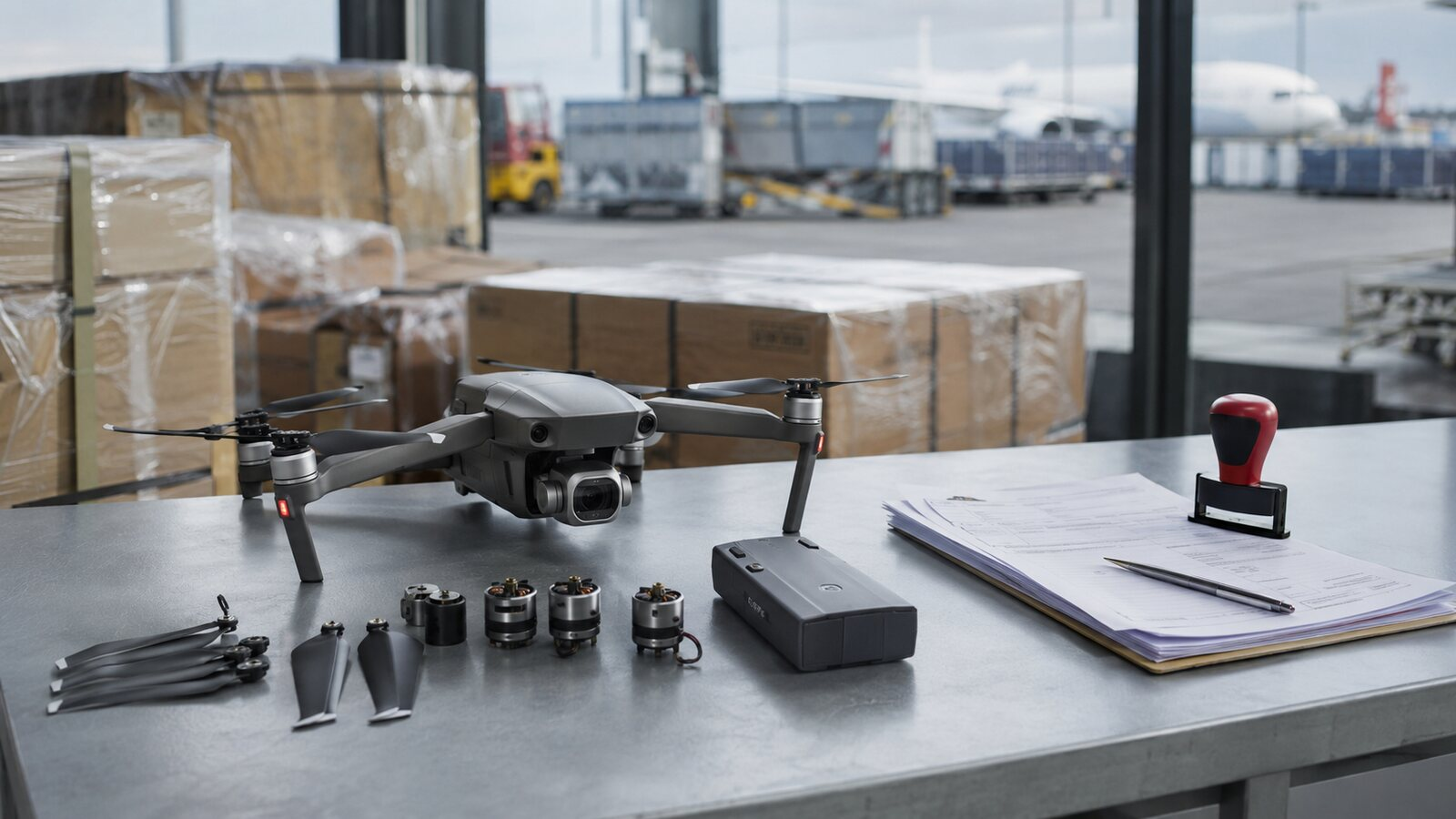
China’s Ministry of Commerce called on the United States to withdraw new Section 232 tariffs on imported drones and components on August 20, 2026. The request does not change the U.S. policy: duties on covered drones and Annex I products are scheduled to begin September 3, while duties on specified Annex III components begin February 9, 2027.
What China Asked the United States to Do
Commerce Ministry spokesperson He Yadong said during a regular press conference that China opposed the tariffs and urged the United States to withdraw them. According to Reuters’ August 20 report, He said the measures discriminate against Chinese products and harm Chinese companies.
That statement is China’s position in the trade dispute. It does not suspend, repeal, or delay the U.S. proclamation.
What the Section 232 Drone Tariffs Cover
President Donald Trump signed the Section 232 proclamation on August 13, 2026. It establishes several categories rather than one blanket rate for every imported drone or component.
- 100% additional duty: covered drones with a maximum takeoff weight above 25 kilograms, drones that integrate thermal imagers, UAS docking stations, and specified critical components listed in Annex I.
- 25% additional duty: covered drones with a maximum takeoff weight of 25 kilograms or less that are listed in Annex II.
- 25% delayed component duty: specified components listed in Annex III, subject to the later effective date.
- Reduced country rates: qualifying products from listed allies may receive capped rates of 10% or 15%, but only when the proclamation’s origin-certification conditions are satisfied.
The White House fact sheet describes the policy as an effort to reduce reliance on foreign UAS supply chains and expand domestic production. Those are stated policy goals, not proof that near-term shortages, price increases, or new U.S. production have already occurred.
The Effective Dates Matter
The proclamation applies the Annex I and Annex II duties to covered goods entered for consumption, or withdrawn from warehouse for consumption, at or after 12:01 a.m. Eastern on September 3, 2026.
The 25% duty on components listed in Annex III begins February 9, 2027. That distinction matters because it would be inaccurate to treat every drone component as facing a new tariff on September 3.
What Commercial Drone Operators Should Review
The duty is imposed at importation, so the immediate compliance burden falls primarily on importers. Commercial operators may still face downstream pricing or availability changes, but the timing and scale will depend on product classification, country of origin, existing inventory, supplier decisions, and whether an exemption or reduced rate applies.
- Ask vendors which Harmonized Tariff Schedule classification and proclamation annex apply to each aircraft, dock, or component.
- Confirm the country of origin for critical hardware, software, and technology rather than relying only on the final assembly location.
- Separate aircraft purchases from replacement-component planning because the effective dates may differ.
- Request written pricing and availability updates before making fleet-budget assumptions.
- For consequential imports, consult a licensed customs broker or trade counsel rather than treating a general product description as a tariff determination.
What Happens Next
China’s request creates diplomatic pressure but does not alter the published U.S. schedule. Operators and importers should watch for Commerce Department implementation guidance, tariff-classification details, exemption decisions, and any negotiated change before the September 3 effective date.